

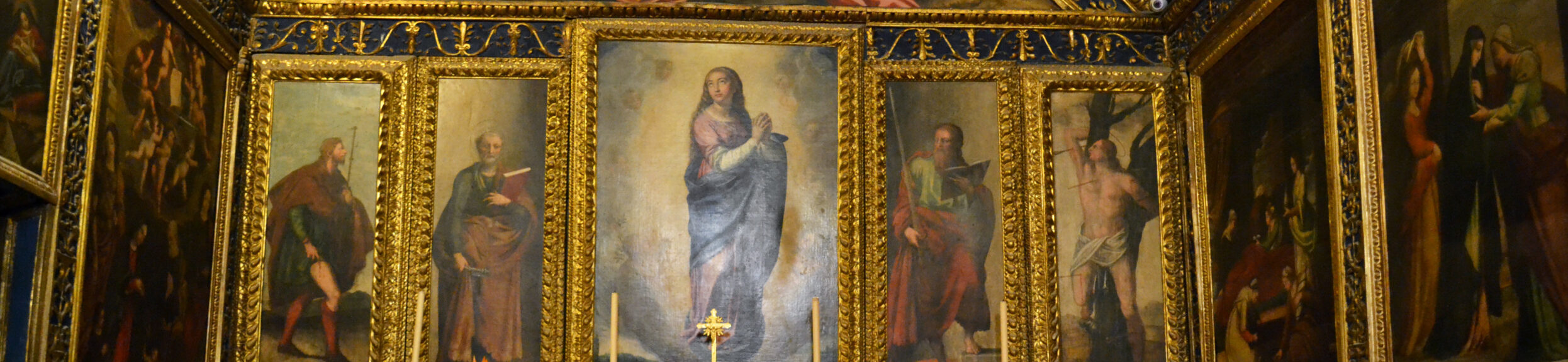
In Via dell’Annunziata , in Gaeta, lies one of the city’s most precious artistic and religious treasures: the Chapel of the Immaculate Conception, also known as the “Golden Chapel” or “Golden Grotto”. It is a truly atmospheric place where art, faith and history come together in an exceptionally beautiful setting.
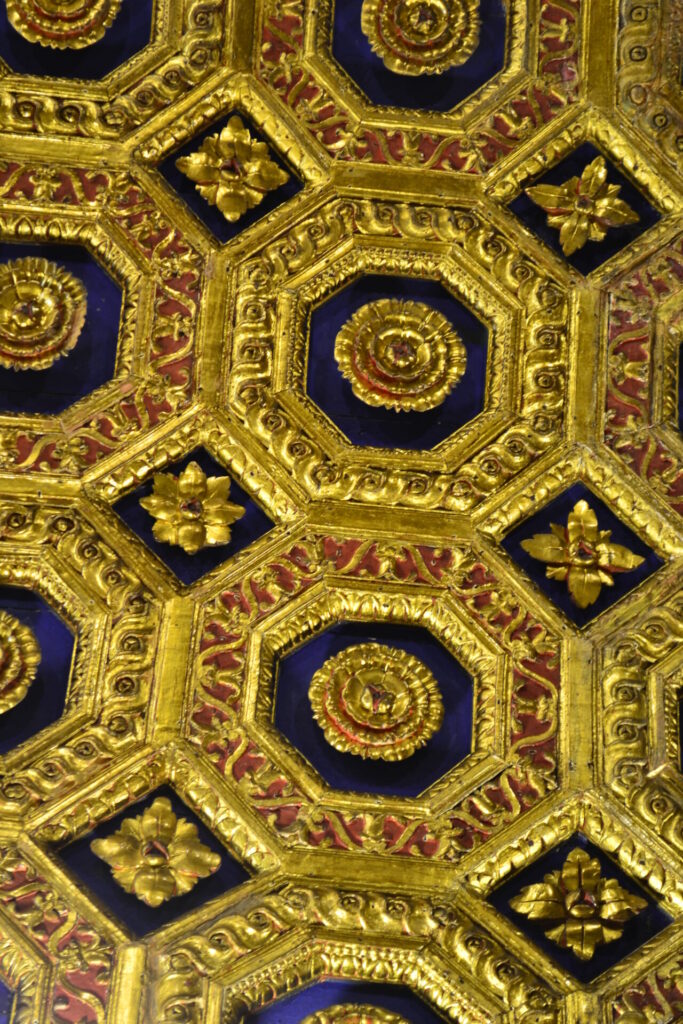
The chapel is distinguished by its magnificent wooden barrel-vaulted ceiling, divided into carved panels and decorated with pure gold leaf, a remarkable feature that gives the interior its distinctive glow and inspired its name. The walls are adorned with a series of paintings, mainly by Giovan Filippo Criscuolo, dating from 1531, depicting scenes from the lives of the Virgin Mary and Jesus. Above the altar is the celebrated altarpiece of the Immaculate Conception, painted in 1582 by Scipione Pulzone, known as il Gaetano, one of the leading figures in 16th-century Italian painting.
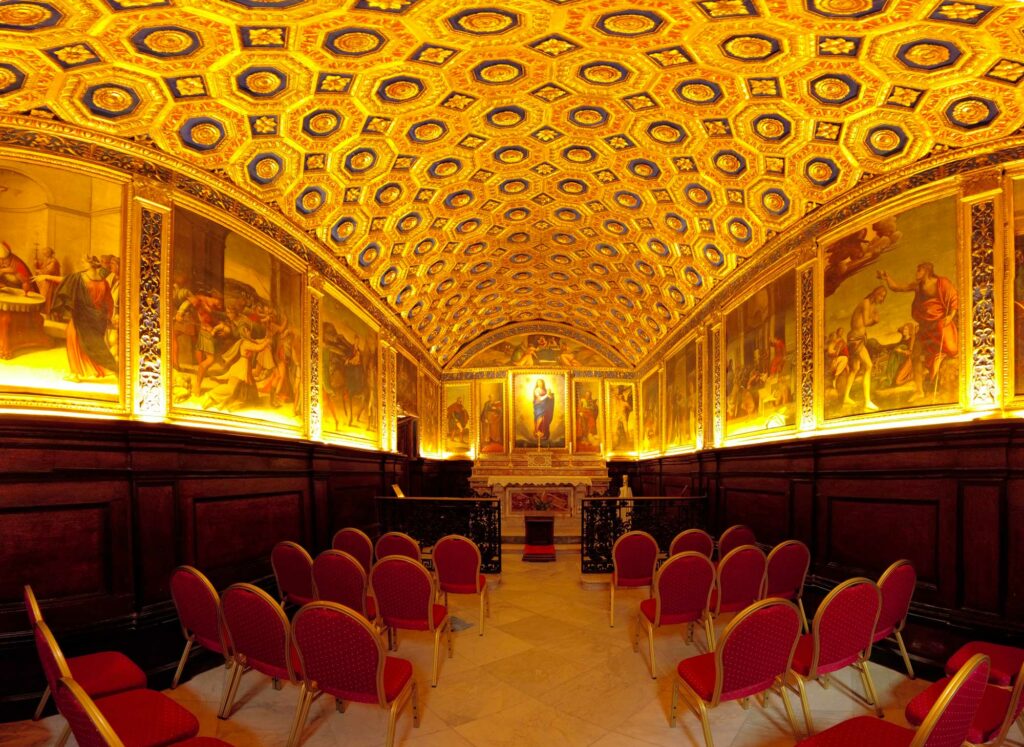
The Golden Chapel also preserves an important chapter in the history of the Catholic Church. During his exile in Gaeta between 1848 and 1849, Pope Pius IX would regularly come here to pray before the image of the Virgin Mary.
According to tradition, his moments of prayer and reflection in this chapel helped shape his decision to proclaim the Dogma of the Immaculate Conception. On 2 February 1849, while in Gaeta, the Pope issued the encyclical Ubi Primum, inviting bishops to express their views on the definition of the dogma. It was eventually proclaimed officially in Rome on 8 December 1854.
Pope John Paul II also stopped to pray in the Golden Chapel during his pastoral visit to Gaeta on 25 June 1989, specifically recalling the city’s role in the history of the proclamation of the Dogma. His visit added further significance to this remarkable place, which brings together outstanding works of art and a religious story of international importance.