


Spello is a picturesque Umbrian hill town nestled on the slopes of Mount Subasio, in the Umbrian Valley, at an altitude of around 280 metres. Here, rolling hills meet a historic centre filled with Roman and medieval landmarks. The municipality borders Assisi, Valtopina, Foligno, Bevagna and Cannara, making it an excellent base for exploring some of Umbria’s most distinctive destinations. Its location between Mount Subasio and the valley floor also makes it easy to combine cultural visits with nature walks and food and wine experiences.
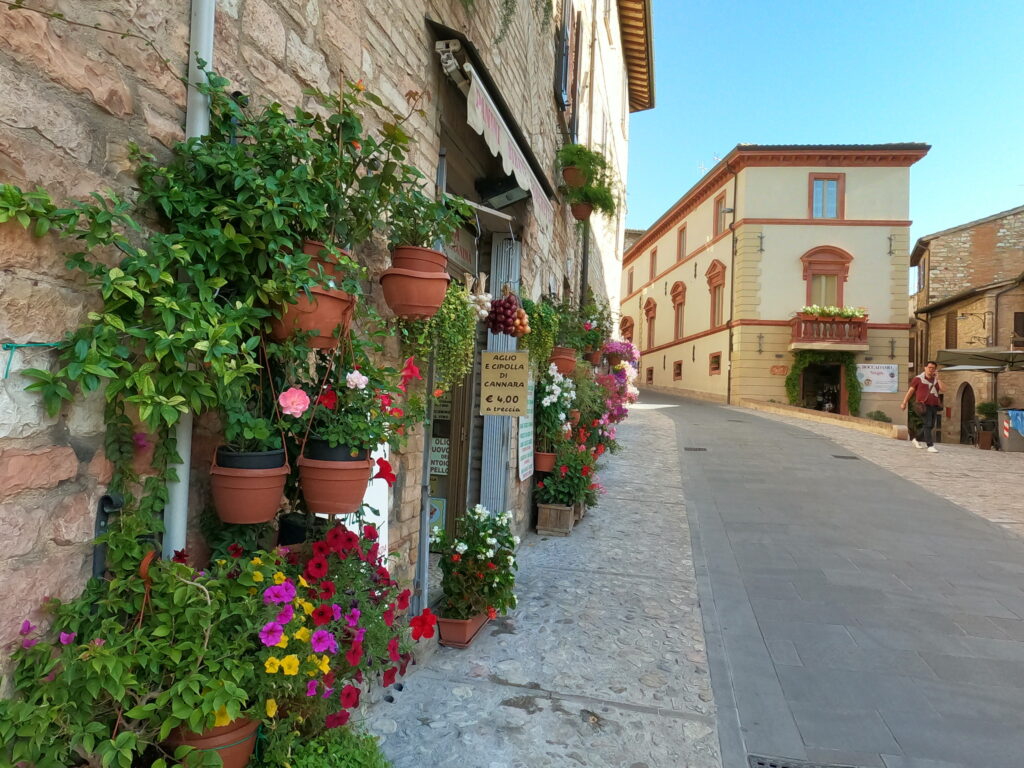
The historic centre is one of Spello’s main attractions, with narrow uphill lanes, archways, stone buildings and panoramic views across the Umbrian Valley.
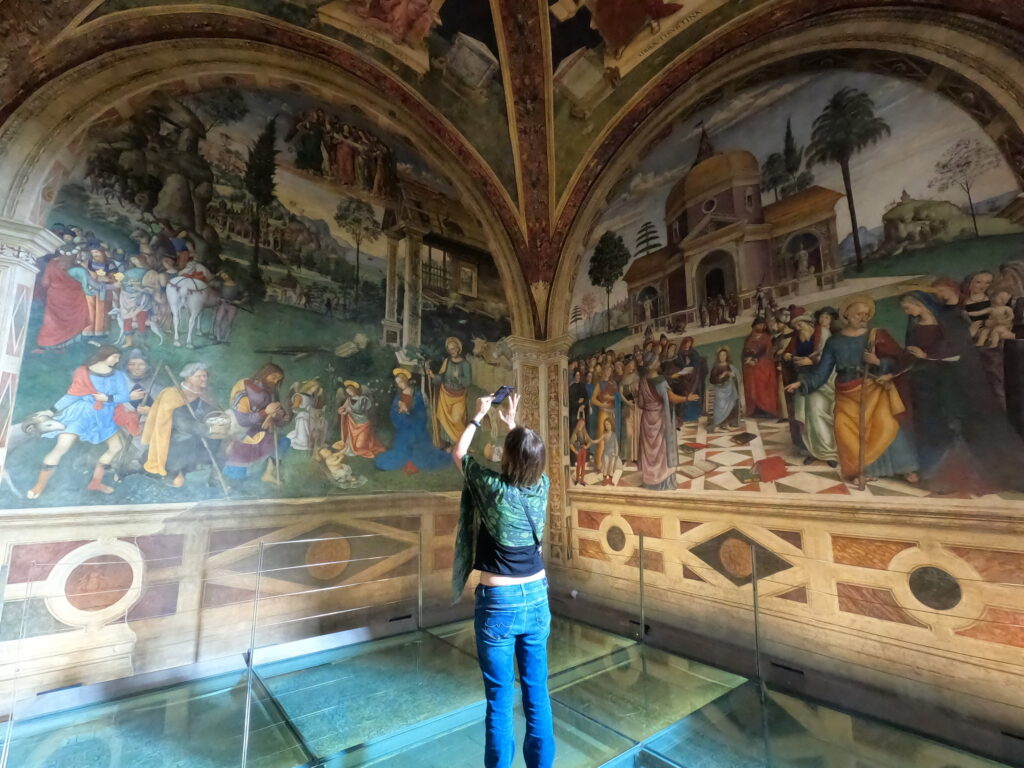
One of the town’s most important landmarks is the Collegiate Church of Santa Maria Maggiore, a medieval church home to the celebrated Baglioni Chapel, one of Pinturicchio’s masterpieces, as well as other works by important Umbrian artists. It is a must-see for art lovers and offers a chance to experience firsthand the remarkable artistic achievements of Umbria during the Renaissance.
During Corpus Christi, Spello takes on a completely different appearance thanks to its famous
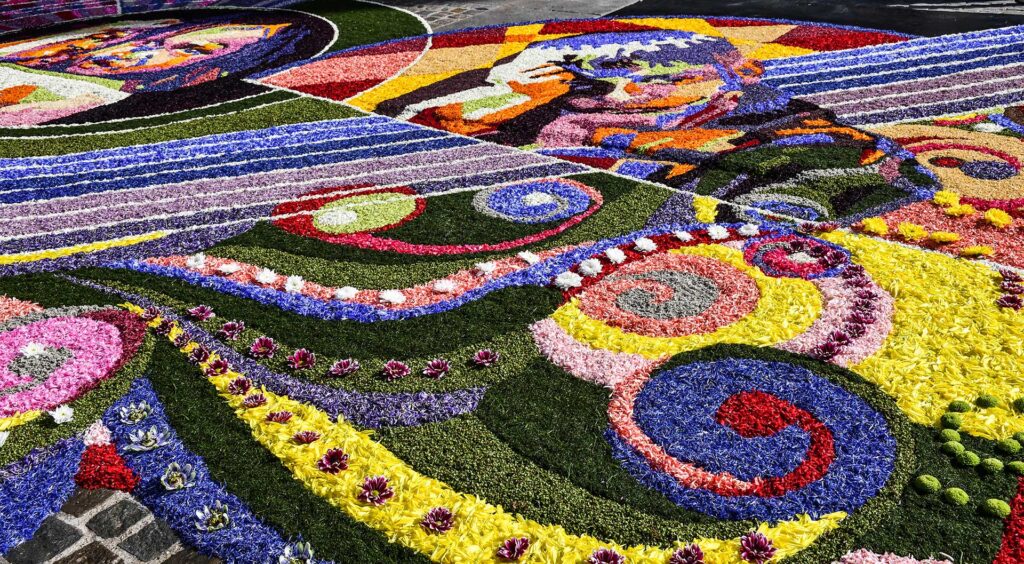
Infiorate flower festival, one of the town’s best-known traditions. The streets of the historic centre are covered with elaborate floral carpets and pictures made from flower petals and other plant materials, often depicting religious themes. The tradition is documented as far back as 1831 and today brings together numerous teams of flower artists. In total, around 1,500–2,000 metres of floral compositions are created, turning the historic centre into a remarkable open-air art gallery.
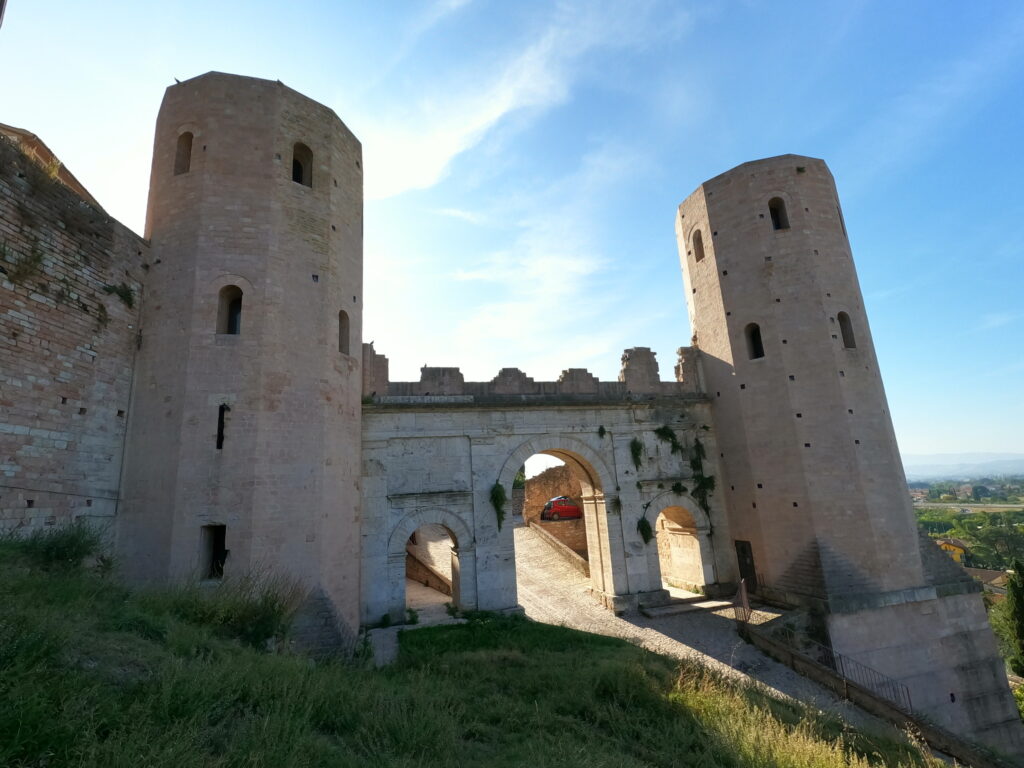
To discover Spello’s Roman heritage, follow the urban archaeological trail and take a closer look at the ancient town walls, which preserve important Roman remains and were later incorporated into and modified during the Middle Ages.
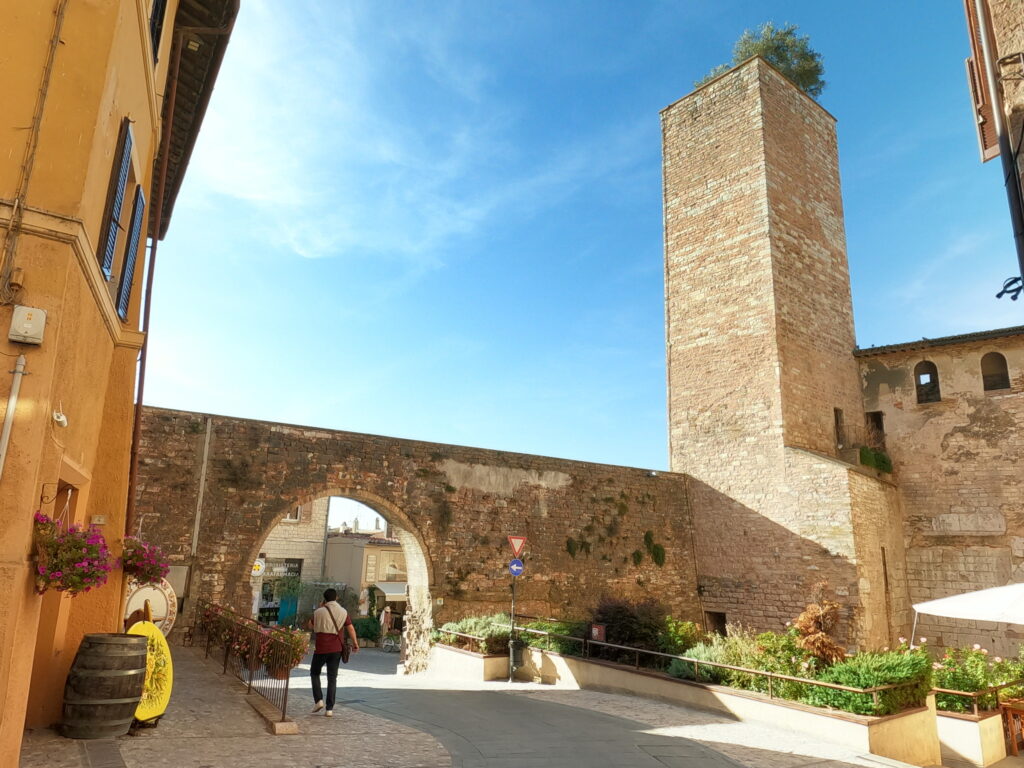
Among the town’s most distinctive landmarks is the Porta Consolare, the ancient main gateway on the southern side of the town. Dating to the Triumviral period, the structure is built from large blocks of white Subasio stone, carefully cut and fitted together without mortar. Its three openings, designed to accommodate carts and pedestrians, still reflect the strategic importance Spello held in Roman times.

Another highlight is the Villa of Mosaics in Spello, which was accidentally discovered in 2005 during public works in the Sant’Anna area. Dating back to the Roman Imperial period, the residence contains around 500 square metres of excavated rooms, including ten spaces featuring exquisite polychrome mosaic floors, geometric patterns and depictions of people, animals and mythical creatures. The modern museum complex brings the villa to life through three-dimensional reconstructions and multimedia displays, making it one of the most rewarding stops for visitors keen to look beyond the town’s medieval character.
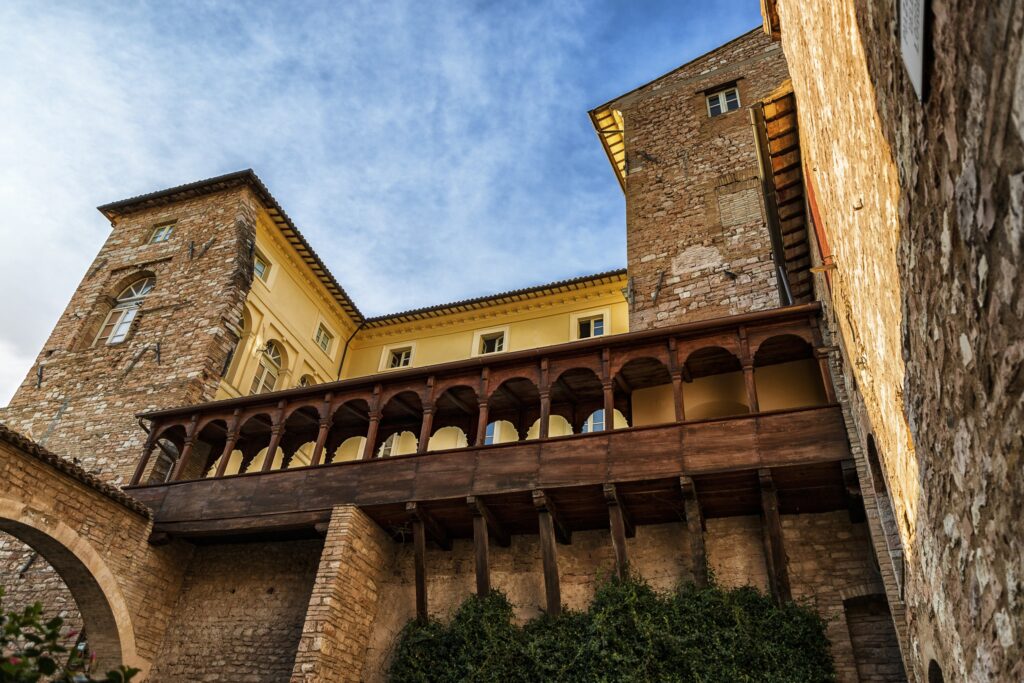
In the heart of the historic centre, Piazza della Repubblica is also worth a visit. The square is home to the Town Hall and the Infiorate Museum, which explores the history and artistic traditions associated with the Corpus Christi celebrations.
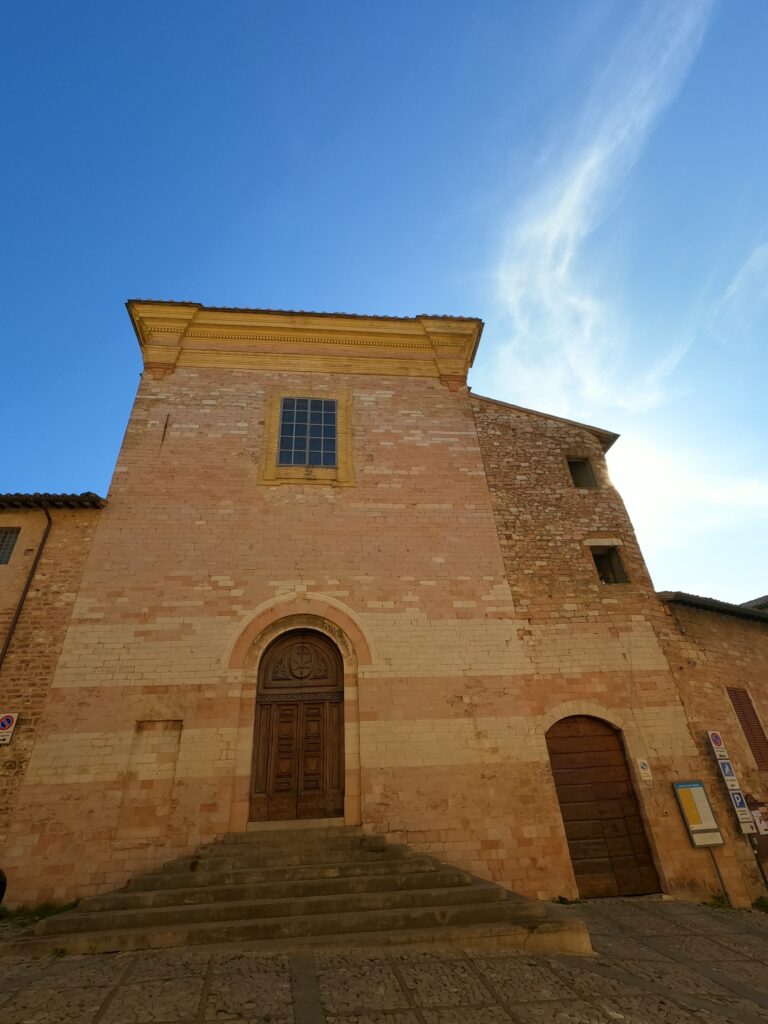
Continuing along Corso Cavour, you’ll come across the Church of Sant’Andrea, the Palazzo dei Canonici and the Civic Art Gallery. The route gradually leads towards the Tega Chapel, Santa Maria Maggiore and Porta Consolare. For those who enjoy scenic views, the uphill walk towards the Roman Arch also leads to a viewpoint overlooking the Umbrian Valley.
What to Eat in Spello
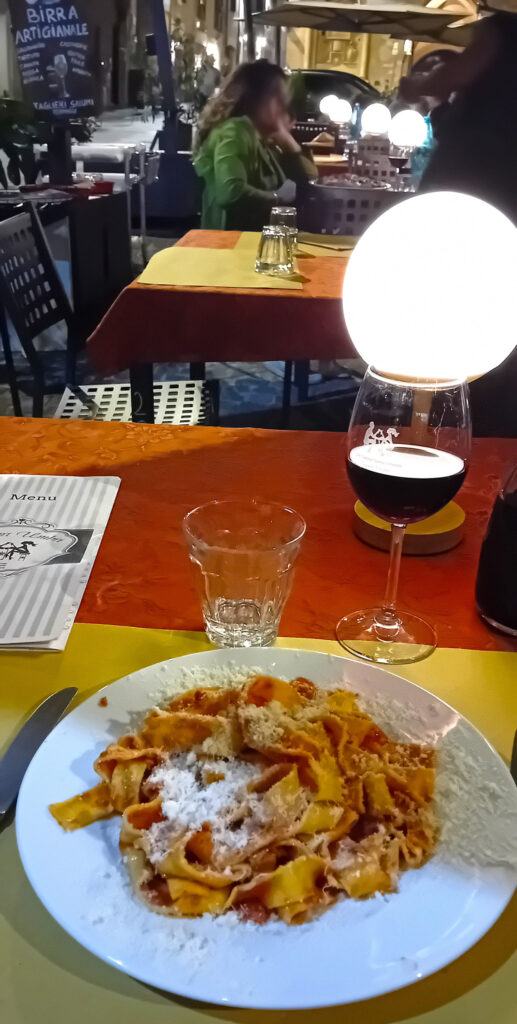
Spello’s food scene is closely tied to Umbrian culinary traditions, with extra virgin olive oil among its most representative local products. Olive groves covering the slopes of Mount Subasio are an integral part of the area’s identity, and during the harvest season, freshly pressed olive oil takes centre stage at tastings and food events. One celebration closely linked to this tradition is the Olive Festival and Bruschetta Fair, which showcases local specialities such as bread, olive oil and truffles.
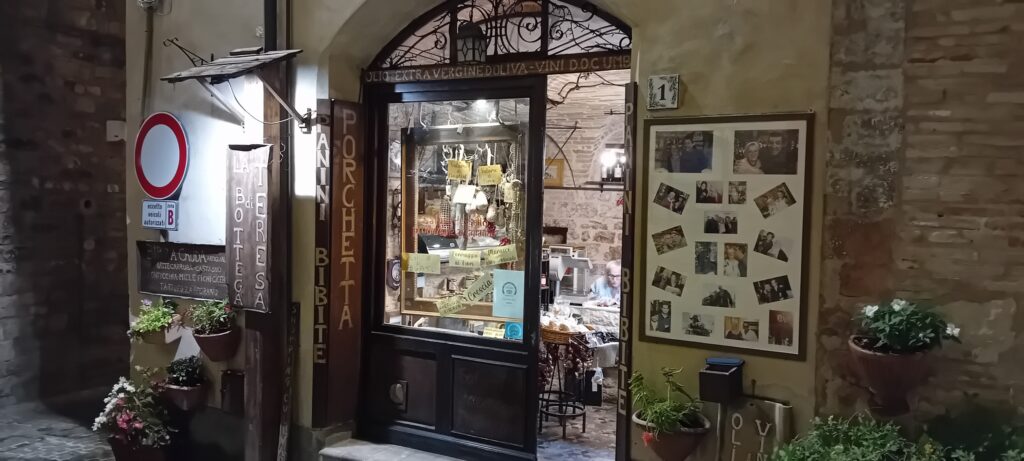
Local menus feature a range of Umbrian favourites, including traditional pasta dishes served with meat or mushroom sauces, truffles, cured meats, cheeses and porchetta. Simple recipes also play an important role, with extra virgin olive oil often serving as a key ingredient. Porchetta, a roast pork speciality popular throughout central Italy, can also be enjoyed in a sandwich as a quick bite. It is best regarded as part of the wider regional culinary tradition rather than a dish unique to Spello.
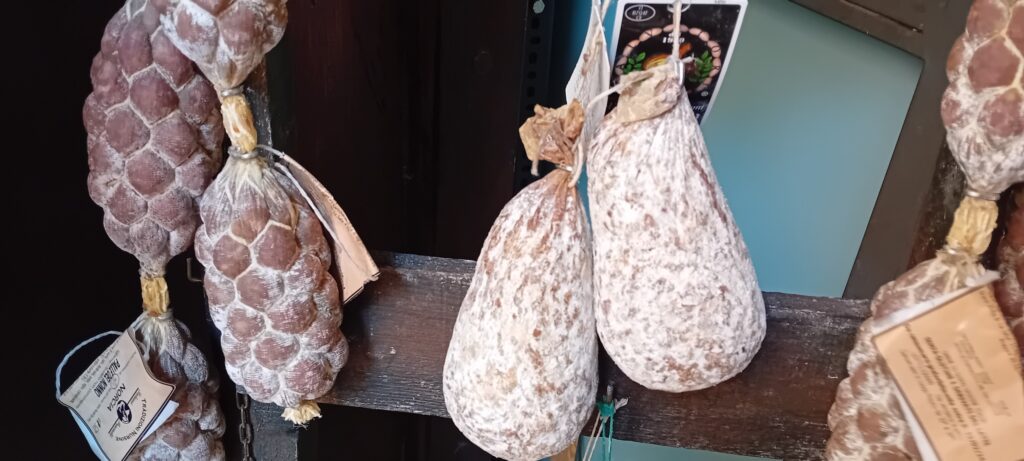
Spello is also ideally placed for exploring Umbrian wines. Restaurant menus and wine shops often feature regional labels such as Sagrantino di Montefalco, one of Umbria’s leading red wines, alongside various wines made from Grechetto grapes. These wines are not exclusive to Spello, however: Sagrantino is specifically associated with the Montefalco area and the appellations governed by its production regulations. To round off a meal, you can also sample regional cheeses and traditional desserts.
Among Umbria’s traditional sweets, the torciglione deserves a special mention. This almond-based dessert is easily recognised by its distinctive twisted shape and is traditionally associated with the Christmas season. One of the region’s most distinctive sweet treats, it is well worth trying if you want to discover something a little different from Italy’s more familiar desserts.