


Small meat skewers, a narrow, elongated grill, the aroma of hot coals spreading through the air: arrosticini are one of the best-known symbols of Abruzzo cuisine and, still today, represent one of the most authentic ways to experience the culture of the region’s inland areas. Also known by the dialect names rustell’, rustelle, rostelle or arrustelle, they are closely linked to the pastoral tradition and to a type of rustic cuisine that, with just a few ingredients and simple techniques, has transformed sheep meat into a specialty now famous far beyond the borders of Abruzzo.
Arrosticini are included in the list of Traditional Italian Agri-Food Products (PAT), recognition that confirms their deep roots in the region’s gastronomic culture. The national PAT list is maintained by the Ministry of Agriculture, Food Sovereignty and Forestry and is periodically updated.
What are arrosticini?
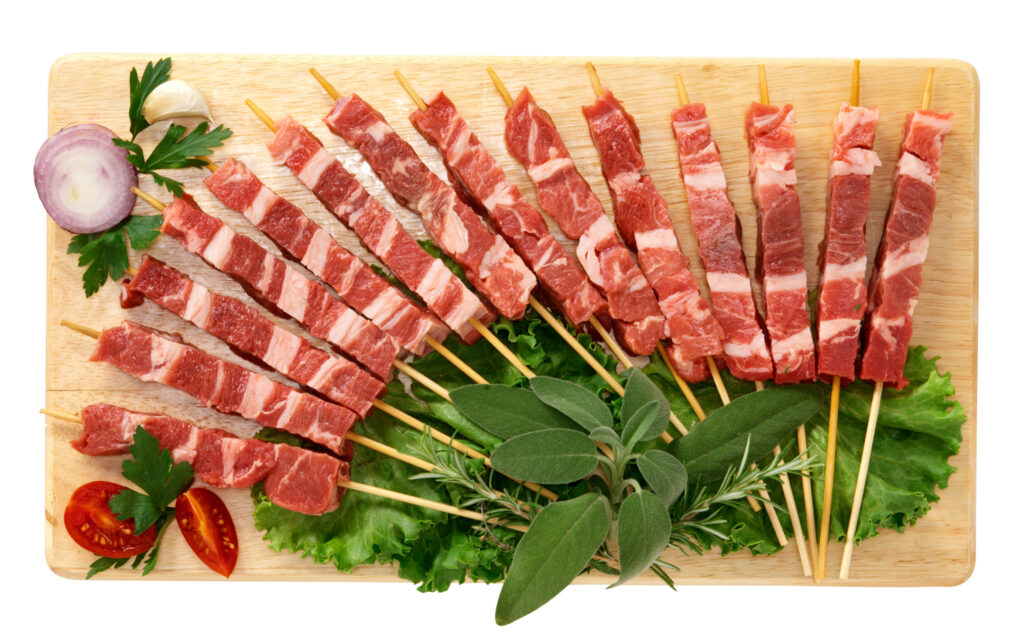
The traditional arrosticino is a small skewer of sheep meat, generally mutton or sheep meat, cut into small pieces and threaded onto a wooden stick. The cubes are normally fairly uniform in size, while handmade versions can have more irregular pieces.
An important element is the presence of sheep fat, which helps keep the meat tender and gives it its characteristic flavor during cooking. The traditional preparation consists of cubes approximately one centimeter per side, threaded onto skewers up to about 20 centimeters long, with an indicative weight of 20-30 grams.
Sheep meat is therefore the traditional reference, while versions made with chicken, turkey, pork or other meats are later variations, which developed especially as arrosticini became popular outside Abruzzo.
Among the variations linked to regional tradition, the liver arrosticino deserves a mention. Known in some areas as arrosticino di fect, it consists of generally sheep liver, which may be alternated with fat and, according to local customs, onion or bay leaves.
A history born between pastoralism and mountains
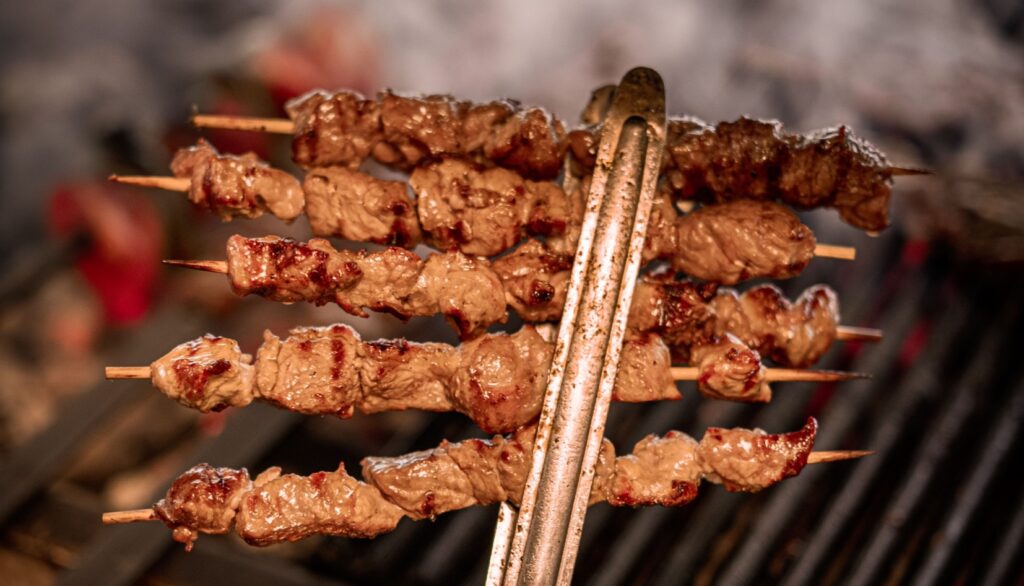
The history of arrosticini is closely linked to Abruzzo’s pastoral culture, although it is impossible to establish with absolute certainty where and when they originated.
Tradition mainly associates them with the Voltigno area, a mountainous territory between Carpineto della Nora , Villa Celiera and Civitella Casanova, on the eastern side of the Gran Sasso. This area is considered one of the main territories historically associated with arrosticini culture.
One legend tells that some shepherds began using small pieces of sheep meat, including those from less valuable parts of the animal, cutting them into pieces and threading them onto thin wooden sticks before cooking them over an open fire.
The dating of this story is not consistent, however: some versions of the tradition give the year 1830, while others place the birth of arrosticini in the 1930s. For this reason, in a tourism article it is more accurate to describe it as an oral tradition and an evolution of the preparation within pastoral culture, rather than attributing the invention to a specific date or particular people. The Abruzzo Region itself presents the story of the two shepherds from Voltigno as a legend.
What is much more firmly established is the connection with pastoralism: sheep meat was an important resource in the cuisine of rural communities, and arrosticini represent this ability to make the most of simple cuts through an essential preparation and direct cooking over fire.
The fornacella, the heart of the tradition
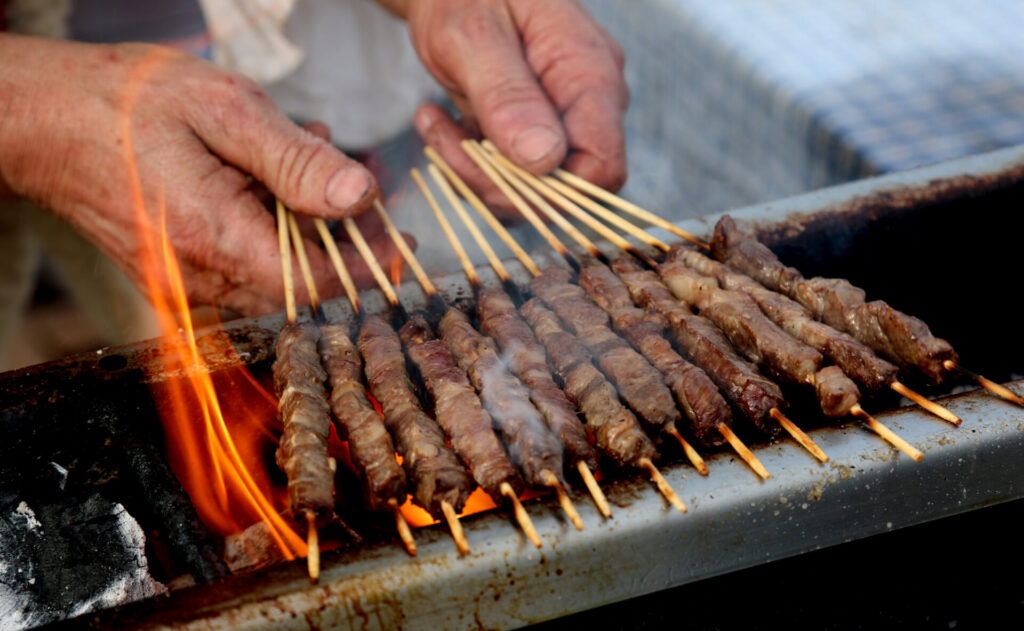
If meat is the main ingredient, the fornacella is the tool that makes the arrosticino distinctive.
It is a narrow, elongated grill, also known as furnacella, canala, canalina or rustillire, depending on the area of Abruzzo. Its particular shape allows the hot coals to be concentrated beneath the part of the skewer occupied by the meat, while keeping the ends of the wooden stick away from direct heat.
It is a simple but particularly effective solution, allowing the arrosticini to be turned during cooking without having to handle the heated part of the skewer directly.
They are cooked over hot coals, which must be hot enough to brown the meat quickly. The arrosticini are turned several times and carefully monitored to prevent them from drying out or burning. The tradition focuses on simplicity: no elaborate marinades or sauces are necessary, because the fat in the meat and the charcoal grilling create the characteristic aromatic profile.
How to eat arrosticini
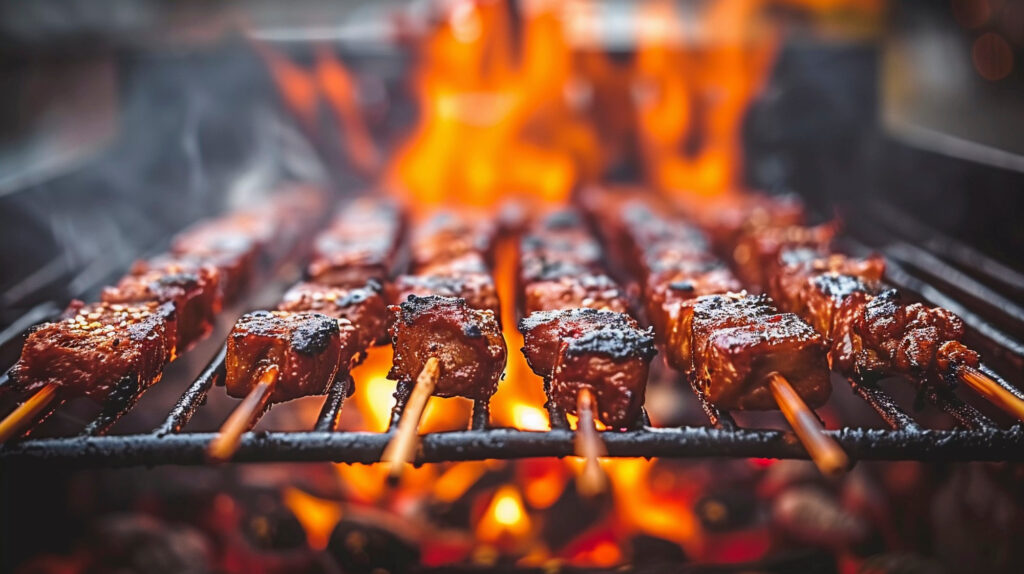
Here, food becomes a true social ritual.
Arrosticini are generally served very hot, often in large quantities, and tradition dictates that they be eaten with your hands. You hold the skewer by the wooden end and pull the meat directly off with your teeth, sliding the stick outward.
This is not simply a matter of table manners: the gesture is part of the traditional experience and contributes to the informal, convivial atmosphere that has always accompanied the consumption of arrosticini.
The fat should not automatically be discarded either: in the traditional preparation it plays an important role in keeping the meat tender and adding flavor.
Pane unto and Montepulciano d’Abruzzo

Arrosticini are often served with rustic bread, which may also be toasted over the coals and dressed with extra virgin olive oil and salt, following a tradition known in different areas as pane unto, pane ‘onde or pan onto.
As for wine, one of the most natural pairings is Montepulciano d’Abruzzo, the region’s great red wine, particularly well suited to accompany flavorful meat with a noticeable fat content.
The strength of the dish lies precisely in its simplicity: freshly cooked arrosticini, bread, wine and a good charcoal fire are enough to turn a simple barbecue into a deeply Abruzzese gastronomic experience.
Arrosticini: what not to do according to Abruzzo tradition
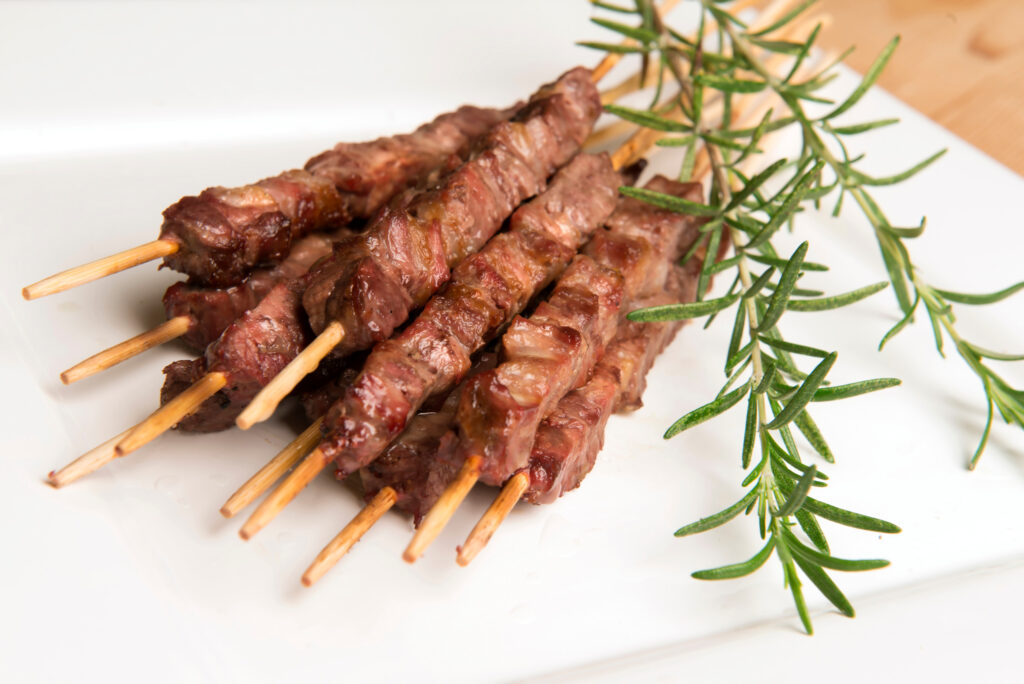
Around arrosticini, a small code of conviviality has developed. Some of these rules are naturally more folkloric than absolute, but they help explain the importance this dish has as a symbol of regional identity for the people of Abruzzo.
One of the first is not to confuse the traditional arrosticino with a generic meat skewer: the Abruzzese version is based on sheep meat and cooking on a fornacella.
Cooking is also an important point. Ovens and frying pans can be used as domestic alternatives, but they do not recreate the experience of traditional charcoal grilling or the distinctive aroma produced by cooking on a fornacella.
And then there are the utensils. At a formal table they might seem essential, but when faced with a plate of arrosticini, tradition suggests leaving them aside: the skewer is held with your hands and the meat is pulled directly from the stick.
As for the quantity, there is no official rule: it is nevertheless customary to order several, because arrosticini are normally shared and eaten in considerably larger quantities than an ordinary meat skewer.
From local specialty to symbol of Abruzzo
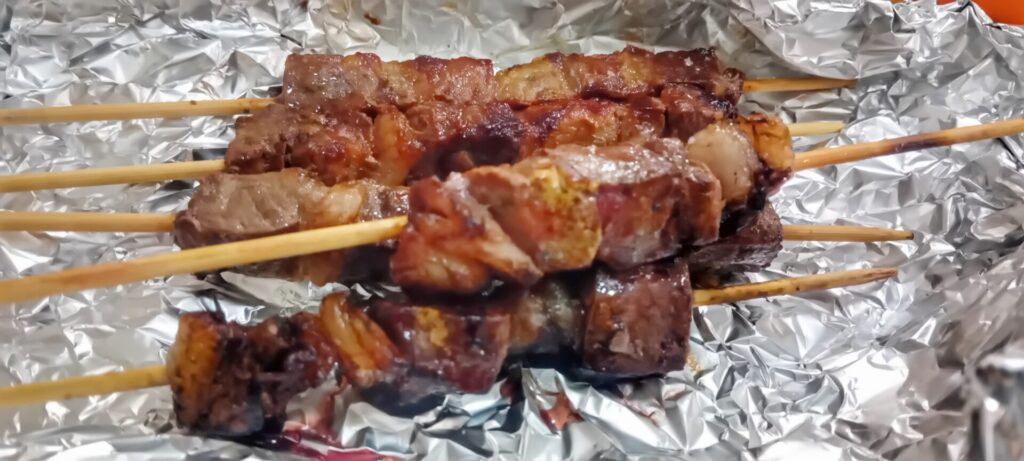
The spread of arrosticini also followed the history of Abruzzese emigration, helping to bring them beyond the region and, later, beyond Italy’s borders. Today they can be found on menus in many parts of Italy and are also produced in versions that differ from the traditional recipe.
The heart of the recipe, however, remains linked to Abruzzo: sheep meat, small pieces, fat, a wooden skewer and charcoal fire.
The Abruzzo Region considers them one of the most representative preparations of its gastronomic culture and recalls their connection with the pastoral tradition, both settled pastoralism and transhumance.
Where to try arrosticini in Abruzzo
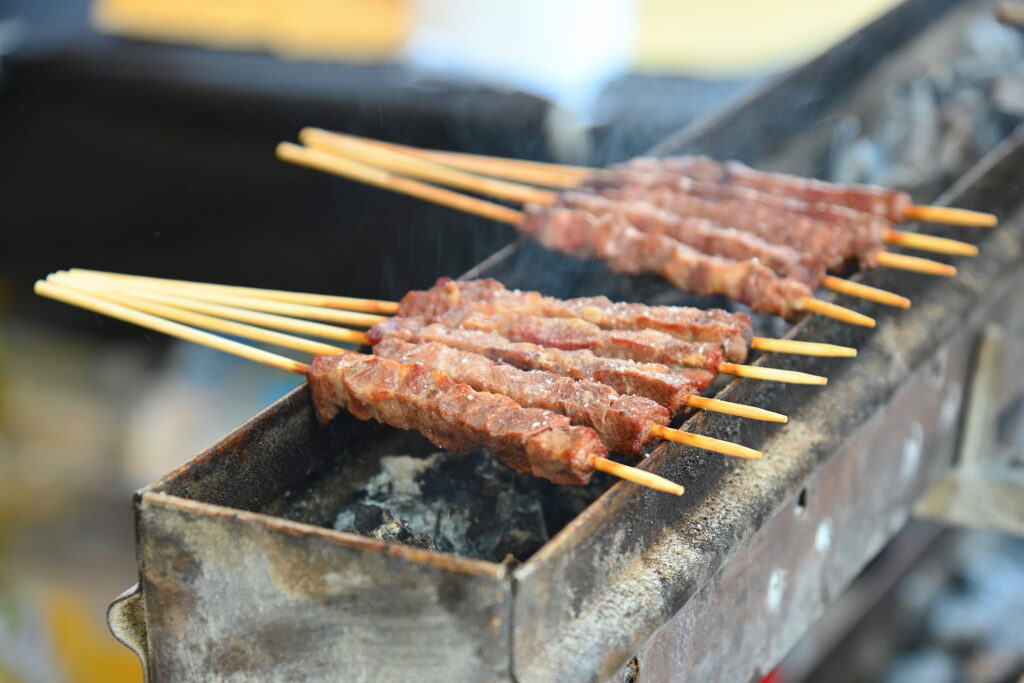
To experience arrosticini in their natural setting, the best option is to look for a grill restaurant, a traditional local trattoria or a village festival in the inland areas of Abruzzo, particularly in the territories historically associated with their production.
A particularly characteristic area is Fonte Vetica and Campo Imperatore, in the Gran Sasso area, where cooking arrosticini outdoors has become part of the local gastronomic experience. Arrosticini are also the focus of numerous festivals and events throughout the region, including the Arrosticinitreffen at Fonte Vetica, which is listed by Abruzzo’s regional tourism promotion as an event dedicated to this specialty.
Among the events highlighted by regional tourism promotion is also Civitella Casanova, a territory historically associated with arrosticini culture, where an example measuring more than 10 meters long was made in past years.
The true taste of Abruzzo
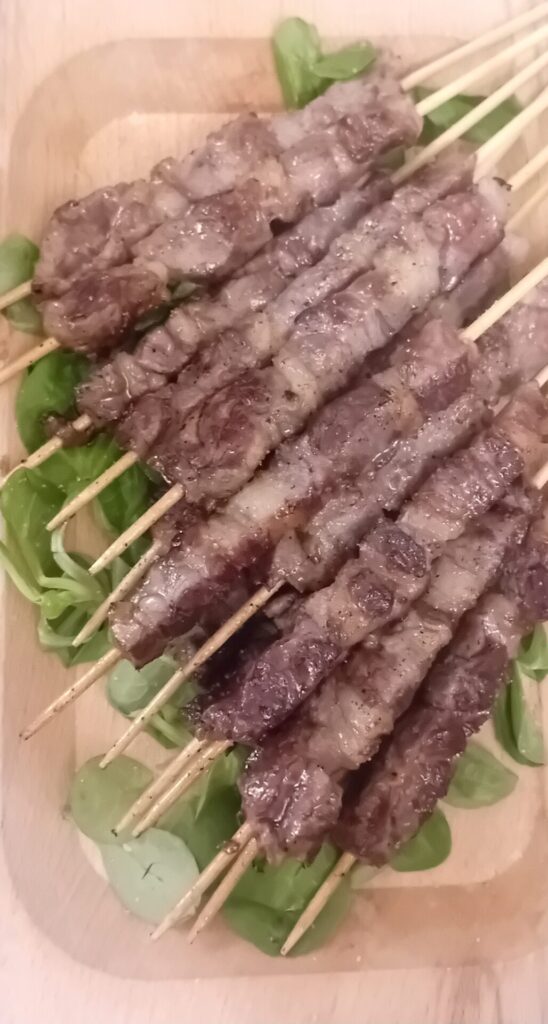
Arrosticini were born, or at least developed, within a culture shaped by pastoralism, mountains, small villages and outdoor life. Their strength does not lie in the complexity of the recipe, but precisely in its simplicity: humble meat transformed by craftsmanship, fat, fire and conviviality.
For this reason, tasting arrosticini in Abruzzo means doing more than trying a regional specialty. It means sitting in front of a fornacella, smelling the charcoal fire, waiting for the skewers to reach the right degree of cooking, taking the first one with your hands and enjoying it with a slice of bread and a glass of Montepulciano d’Abruzzo.
It is in this simple, almost primitive gesture that arrosticini continue to tell an authentic part of the history and gastronomic identity of Abruzzo.