

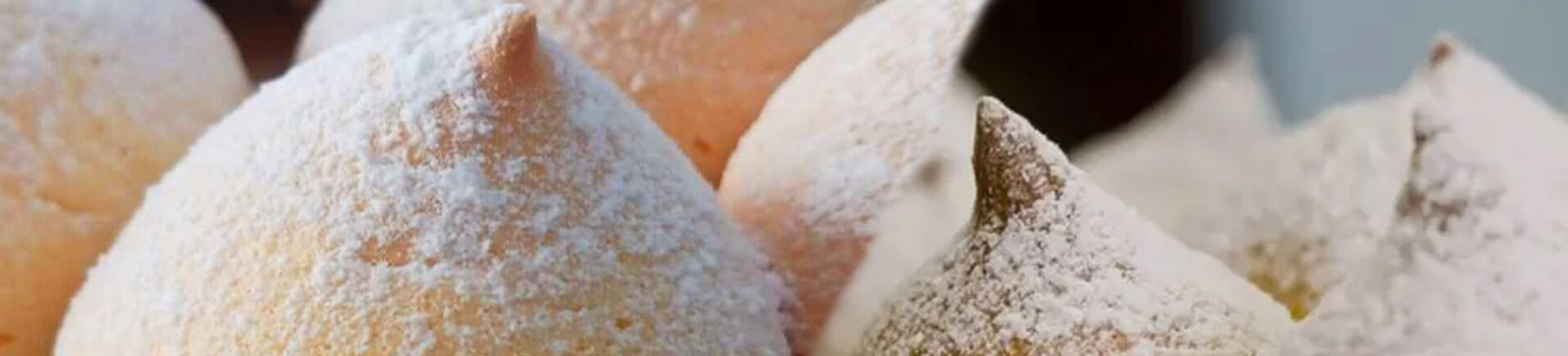
A soft sponge cake dome, a clearly visible tip on top, plenty of cream and a cloud of icing sugar: Tette delle monache (nun breasts) are one of the most curious pastries in the Italian culinary tradition, not only because of their decidedly unusual name, but also because of the many stories that have accompanied their origins over time. And while their shape can easily be misleading, behind this specialty lies a simple preparation made with just a few ingredients and a technique that is anything but straightforward.
The name can also cause some confusion because very similar pastries are found in Puglia and Abruzzo. In Altamura , in the heart of the Murge area around Bari, visitors can find Tette delle monache, while in Guardiagrele, in the province of Chieti, the famous specialty is known as Sise delle monache, also called Tre Monti. The two specialties share the idea of a soft pastry filled with cream and covered with icing sugar, but they have different characteristics and local traditions.
Tette delle monache from Altamura
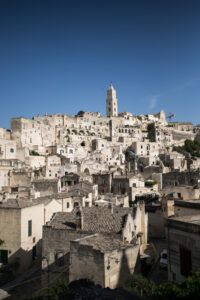
In Altamura, Tette delle monache are small, rounded pastries with a distinctive tip created during the preparation of the mixture. Their origin, however, is far from certain: local tradition links them to nuns and, in particular, to the Monastery of Santa Chiara, but there is insufficient historical evidence to attribute the invention of the pastry to the nuns with certainty.
It is therefore more accurate to speak of tradition and popular memory rather than a precise date or a documented invention. The curious name is also thought to be linked to the pastry’s shape, while the name itself and the stories surrounding it have been passed down through local accounts.
The preparation, on the other hand, is quite distinctive: the mixture is made with eggs, sugar and flour, the mixture is whipped for a long time, then transferred to a piping bag and shaped into the characteristic domes with a small tip at the top.
Once baked, the Tette delle monache are filled from the bottom with custard, often lightened with whipped cream, and finally covered with icing sugar. The result is extremely soft: on the outside the pastry appears light and dry, while inside it hides a generous amount of cream.
A simple pastry, but anything but ordinary
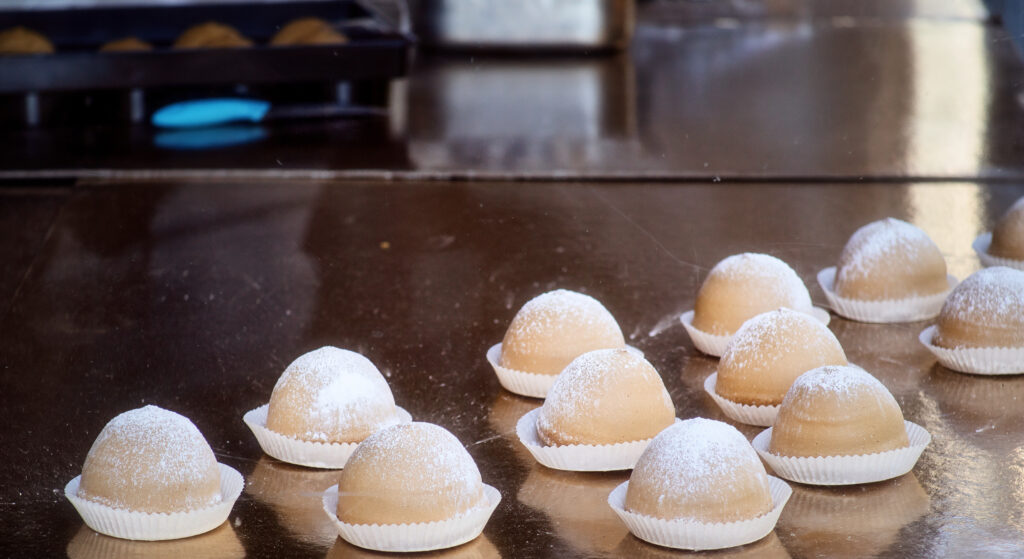
The distinctive character of Tette delle monache therefore lies not in the number of ingredients, but above all in the preparation. The mixture must incorporate a considerable amount of air in order to achieve the light texture that characterizes the finished product.
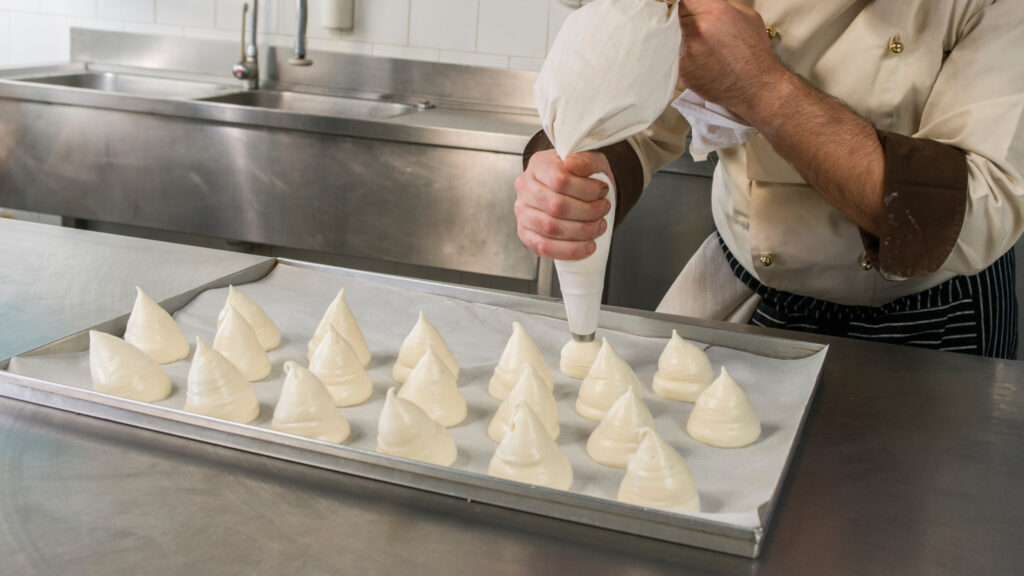
The shape is also created with care: the mixture is piped onto the baking tray and finished with an upward movement that creates the small central protuberance. After baking, the pastry is filled with cream through a hole made in the bottom.
The result is a specialty that is perfect for a sweet break, perhaps accompanied by an espresso, and represents one of the many gastronomic curiosities to discover during a visit to Altamura, a city best known for its DOP-certified bread but rich in many other expressions of the culinary tradition of the Murge area.
Sise delle monache from Guardiagrele
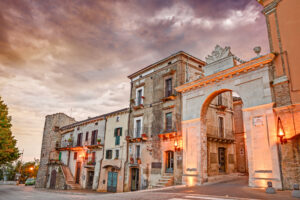
From Puglia to Abruzzo, the name changes slightly, but the curiosity remains. In Guardiagrele, in the province of Chieti, the protagonists are the Sise delle monache, also known as Tre Monti, a specialty so closely associated with the town that it is considered one of its gastronomic symbols.
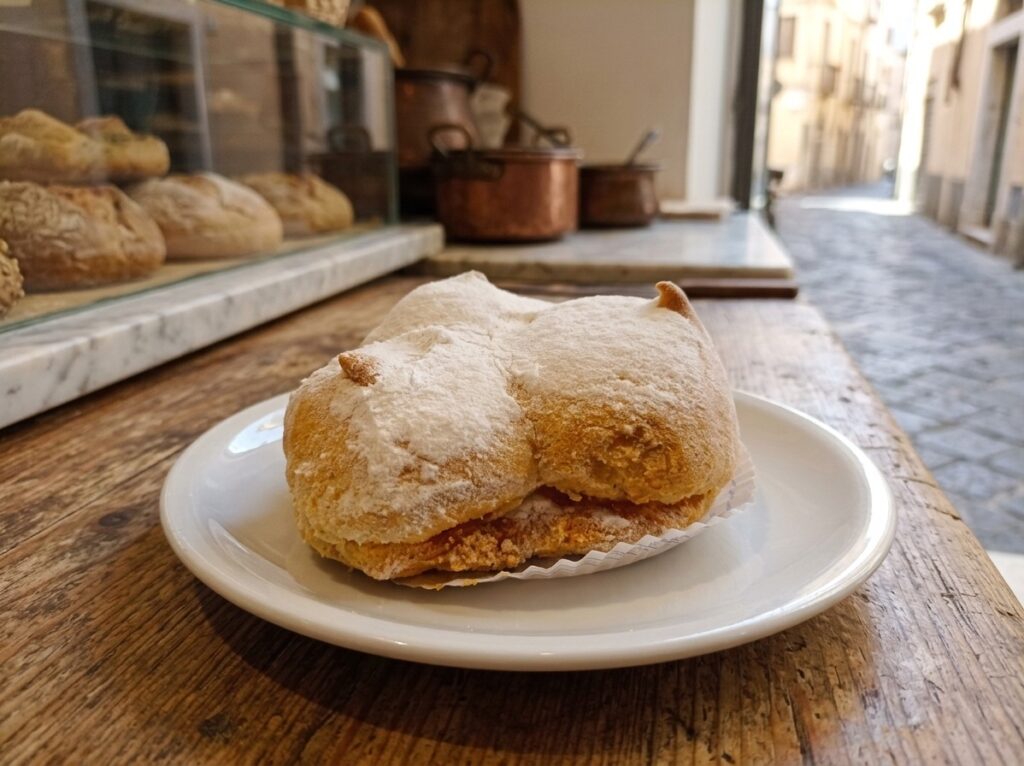
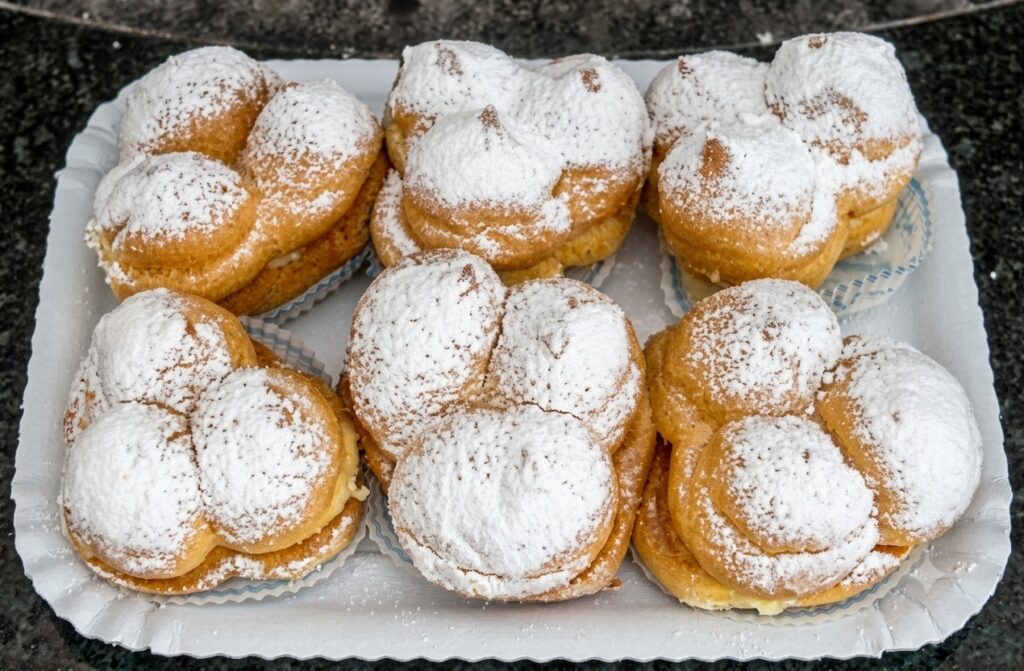
Here the shape is immediately recognizable: not a single tip, but three closely spaced protuberances, created by shaping the mixture before baking. The Abruzzo Region describes the pastry as consisting of two layers of soft sponge cake, separated by custard and covered with very fine icing sugar.
The ingredients are simple: the sponge cake is mainly made with eggs, sugar and flour, while the custard traditionally contains milk, eggs, flour, sugar and lemon. It is precisely this apparent simplicity, combined with the artisanal preparation, that makes the pastry particularly delicate.
Why are they called Sise delle monache?
Here we enter the realm of legends, because there is no historically certain explanation for the name.
One of the best-known traditions links the Sise to the Poor Clare nuns of the Convent of Santa Chiara in Guardiagrele, who are credited with preparing the pastry, also in connection with the feast of Saint Agatha. Another, decidedly more curious legend claims that the nuns used a small cloth pad to alter the shape of the chest beneath their habit, creating what would become the pastry’s characteristic “third pointThere is also an explanation linked to the name Tre Monti, according to which the three protuberances represent the mountains visible from the Guardiagrele area. This interpretation, too, belongs to tradition and should not be presented as a definitively established historical fact.
In short, there is no shortage of versions concerning the origins of Sise delle monache, but one thing is certain: the curious name has now become an integral part of Guardiagrele’s gastronomic identity.
Giuseppe Palmerio and the tradition of Guardiagrele
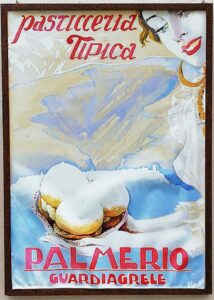 An important point, however, concerns the history of local pastry-making. The Abruzzo Region attributes the creation of the specialty in 1884 to Giuseppe Palmerio, explaining that the pastry chef had learned the art of pastry-making in Naples before developing this dessert. Other local sources, however, recall a possible earlier tradition associated with the Poor Clares and the transmission of the recipe to the Palmerio family.
The Palmerio family nevertheless played a fundamental role in spreading Sise delle monache, and the specialty remains deeply connected to the historic pastry shops of Guardiagrele. The family’s tradition is also documented in the history of Pasticceria Lullo, whose roots go back to the Palmerio dynasty.
Guardiagrele’s symbolic pastry
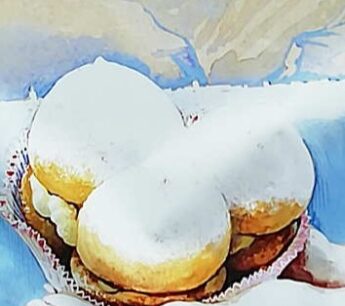 For lovers of gastronomic tourism, tasting a Sise delle monache directly in Guardiagrele is almost a must. The pastry is prepared fresh, with soft sponge cake, custard and plenty of icing sugar, and its texture is an integral part of the experience.
The local tradition is also associated with a very practical way of enjoying it: the icing sugar is so abundant that it easily ends up on hands, clothes and face. It is therefore no surprise that the historic local pastry shops have also become known for the small brush used to clean oneself after tasting the dessert.
It is one of those curiosities that make the specialty even more charming: in Guardiagrele, in short, eating a Sise delle monache is an experience that may leave a few white traces on your clothes, but is unlikely to leave you indifferent.
Altamura and Guardiagrele, two traditions to taste
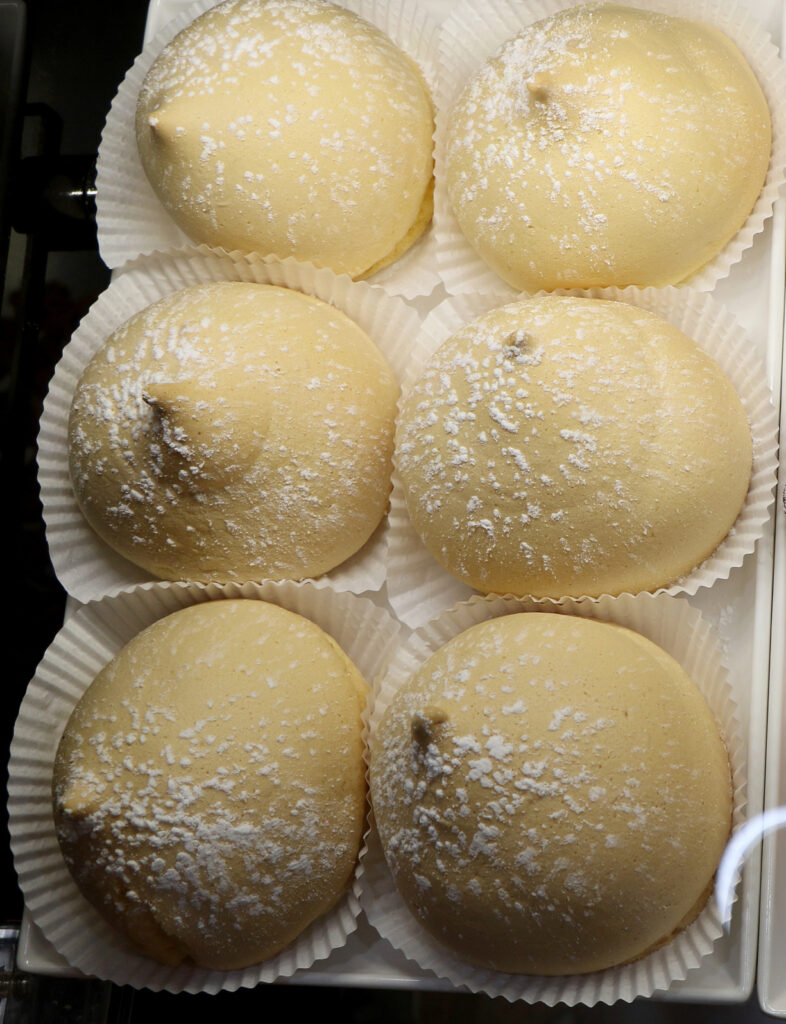 At first glance, the Tette delle monache from Altamura and the Sise delle monache from Guardiagrele look almost like the same pastry, but a closer look reveals the most obvious difference: one tip in the Apulian version, three in the Abruzzese specialty.
Their respective histories are also different and, in both cases, combine documented elements with popular stories. In Altamura, the pastry belongs to the local tradition and, according to popular memory, is associated with the nuns of Santa Chiara; in Guardiagrele, on the other hand, the 19th-century history of the Palmerio family intertwines with the various theories concerning the product’s convent origins.
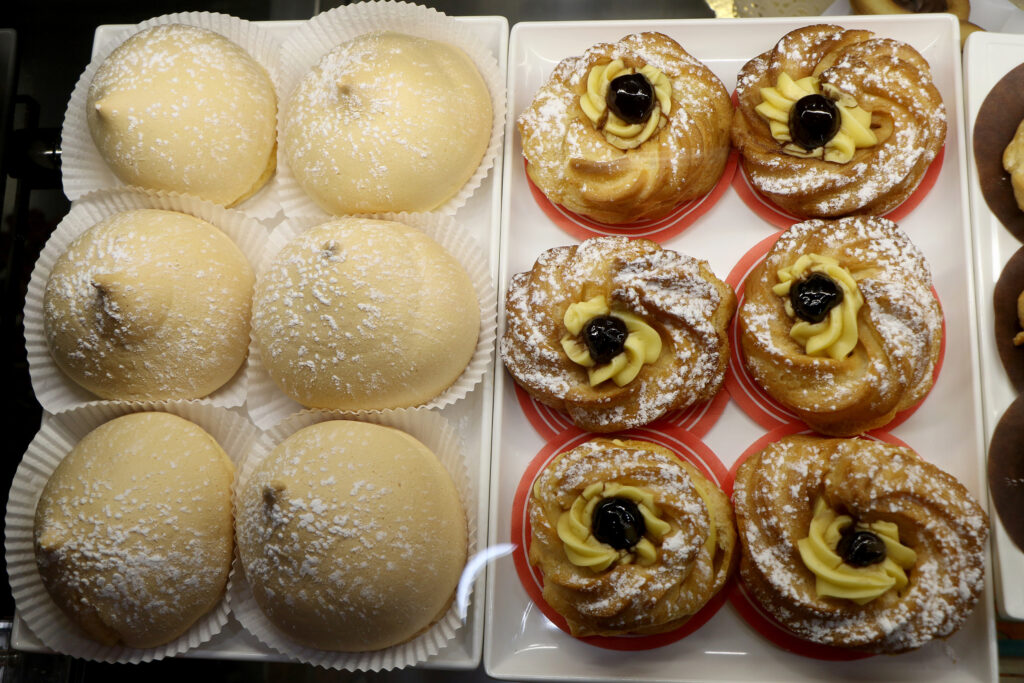 Rather than trying to establish which version is the “original”, it is therefore worth considering them as two independent regional specialties, each deeply connected to the territory where it was born and developed.
And for those travelling with the curiosity to discover Italy through its lesser-known flavours as well, the route is simple: a Tetta delle monache in Altamura, among the narrow streets of the city of bread, or a Sise delle monache in Guardiagrele, overlooking the mountains of the Maiella. Two pastries with a curious appearance, two different traditions and, above all, two good reasons to enjoy a delicious break during your journey.