


What to see in Gaeta?
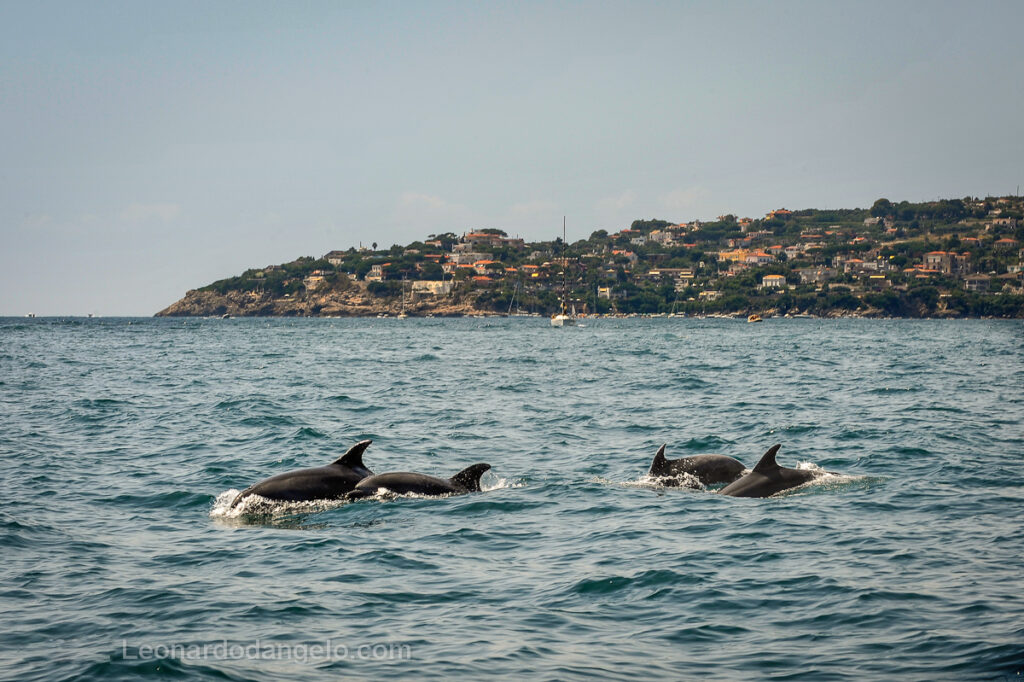
Known as the city of 100 churches, Gaeta has countless places worth discovering, but the sea is undoubtedly its main attraction. If you visit in summer, when everyone wants to enjoy the intense heat of the season, then shorts, flippers and a mask are all you need to explore the seabed, spot fish and discover the caves of this blue oasis.
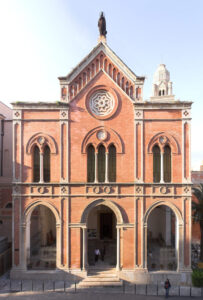
There is plenty to do during the rest of the year as well, with so many attractions that you are truly spoiled for choice. Among them are numerous religious buildings, including the Cathedral of Saints Erasmus and Marcian , the Church of the Annunciation
 with its Golden Chapel, the Church of St Francis , as well as the small Church of San Giovanni a Mare, which is also well worth a visit.
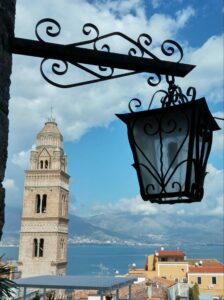
The civilian and military architecture is truly fascinating, starting with the San Francesco Fountain, then continuing towards the old city gates, such as Carlo III and Carlo V, then on towards the “Favorita” battery, the Split Mountain with the Turkish Cave, and the Cathedral of the Most Holy Trinity, and, of course, the Angevin and Aragonese Castle, famous for the siege that took place between 1860 and 1861 and led to the end of the Kingdom of the Two Sicilies and the Bourbon dynasty.
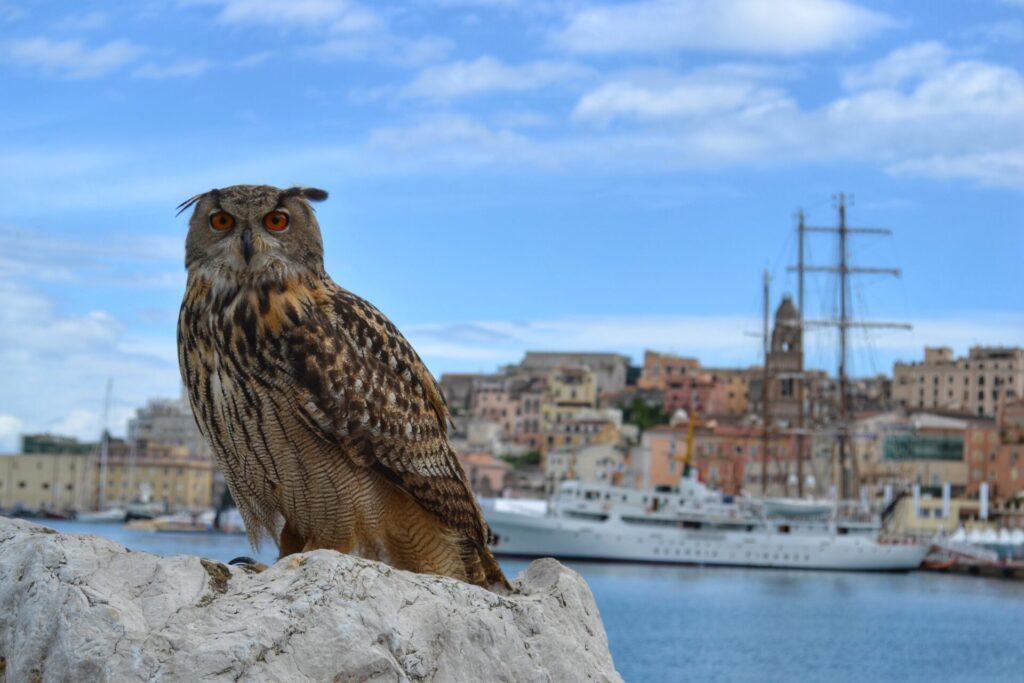
As mentioned above, Gaeta lies in the heart of the Riviera di Ulisse Regional Park, where the mountain overlooking the city provides a suitable habitat for the peregrine falcon, dwarf palm and various species of fish. The area also features historic military structures, including the “Carolina” Bourbon powder magazines and batteries, “Real Ferdinando” and “Trabacco”, the bastions, the defensive walkways with their batteries, as well as a villa with a private botanical garden managed by the CY Towbly Foundation.
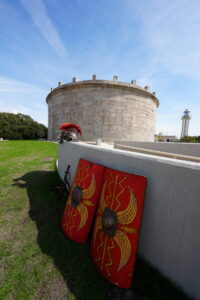
At the top of the mountain stands the Mausoleum of Lucius Munatius Plancus , a great Roman military commander. For hiking enthusiasts, a walk through the Monte Orlando Regional Park makes a stay here even more enjoyable, with clean air and wonderful views over the cliffs, where the more adventurous take on “pure” climbing high above the sea.
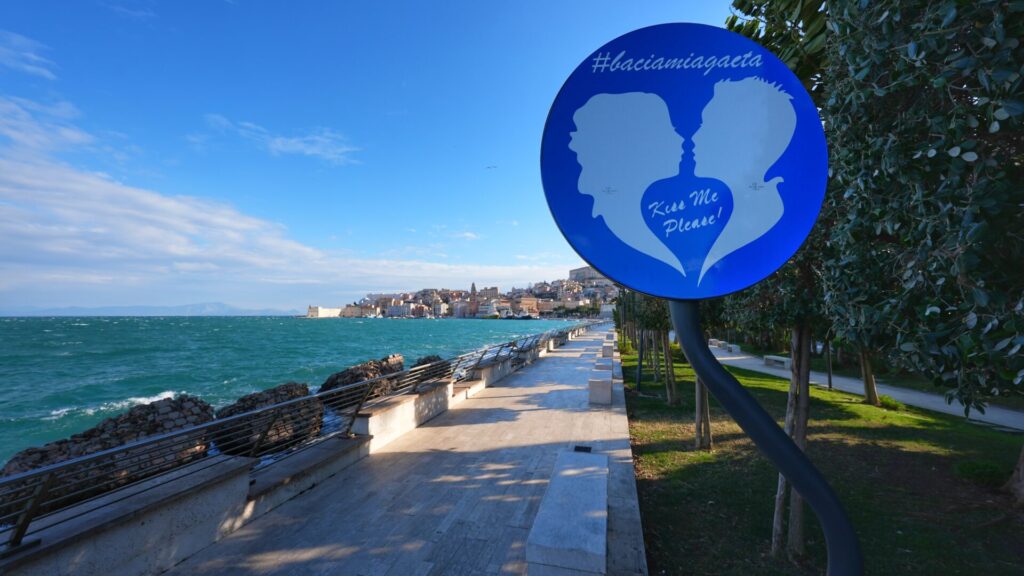
Taking a step back into history, many famous figures passed through Gaeta, but as a seaside city it could hardly fail to produce one of the great explorers of history: Giovanni Caboto, who, in the service of the English Crown, discovered Newfoundland, now part of Canada. He is still commemorated today by a plaque on the Lovers’ Promenade, on the seafront where the imposing bastions once stood.
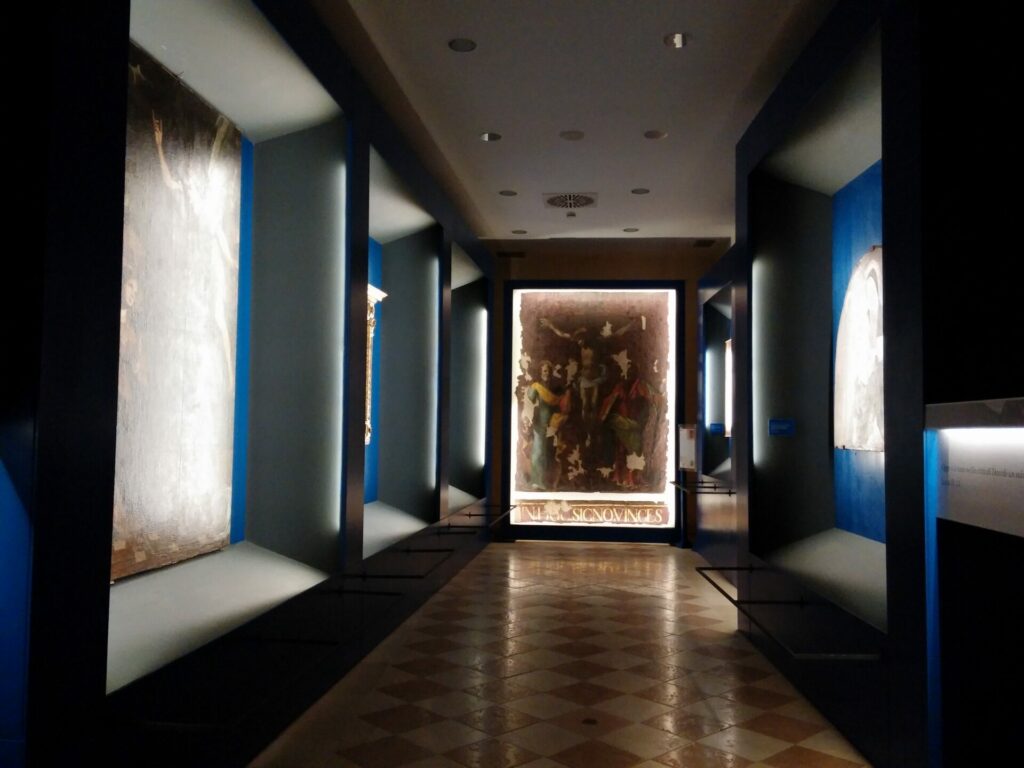
For culture lovers, the historic district is home to several museums. The most important is the Diocesan Museum, where, among goldwork and historical documents, the Banner of Lepanto stands out as a unique historical piece. Also worth visiting are the municipal contemporary art gallery and the Sea Museum.
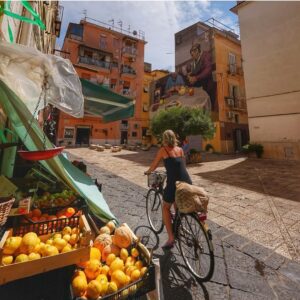
Walking through the narrow lane of Via Indipendenza finished in volcanic stone can be a pleasant way to unwind and relax both body and mind. Lined with decorated alleyways, small squares and votive shrines, it is also a great opportunity to enjoy a coffee, grab a slice of pizza or browse the many small shops selling souvenirs.
Beaches
The city is famous for its seven beaches, which have welcomed countless visitors, including international tourists, for many years. Gaeta has flown the Blue Flag for more than ten consecutive years, and its coastline has also provided the perfect backdrop for film and television productions. In fact, Jude Law filmed a scene from “The New Pope” here, while Saverio Costanzo featured Arenauta Beach in his TV series “My Brilliant Friend“.
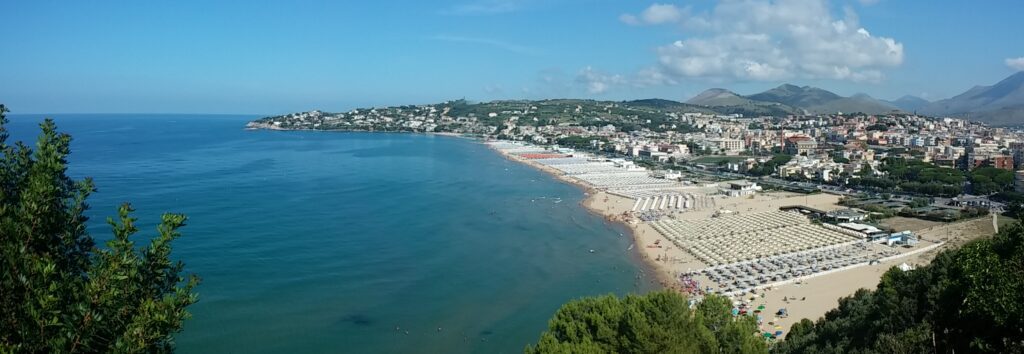
Serapo Beach is the city’s main beach, known for its fine golden sand and crystal-clear water. One of its most distinctive features is the tiny islet known as the Nave di Serapo, named for its shape, which resembles a boat turned to stone.
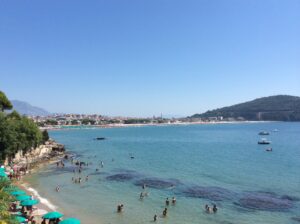
Fontania Beach is a small bay where two small Roman-built pools can still be seen, together with the remains of the Roman villa of Gnaeus Fonteius and several cryptoporticoes, also dating back to Roman times.
The “Forty Oars” Beach is a small beach between Ariana and Fontania. Its name comes from the fact that the distance between the two ends can be covered with forty strokes of the oar.
Not far from the beach lies the “Devil’s Well” or “Well of the Keys”, a large cave extending both above and below sea level, with an entrance accessible by small boat or by diving. It is only a few metres deep, and its waters are home to rich marine life that reveals the full richness and variety of its colours.
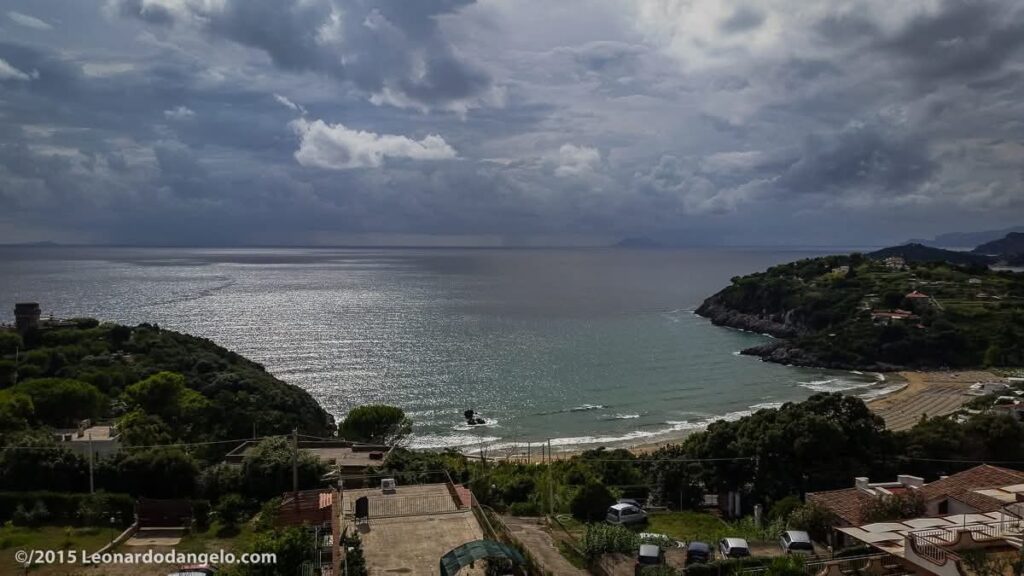
Ariana Beach is a bay of white limestone sand, characterised by fine sand, crystal-clear water, Mediterranean vegetation and the so-called “Three Dogs Rocks”. The beach lies between two high rocky outcrops, one of which is crowned by Torre Viola, part of the coastal defence and lookout system. Arenauta Beach lies beneath a particularly beautiful cliff. Part of the bay is used by naturists all year round. Fine golden sand and clear water make this a true corner of paradise. Another notable feature is the presence of a cave and a rock face used for climbing.
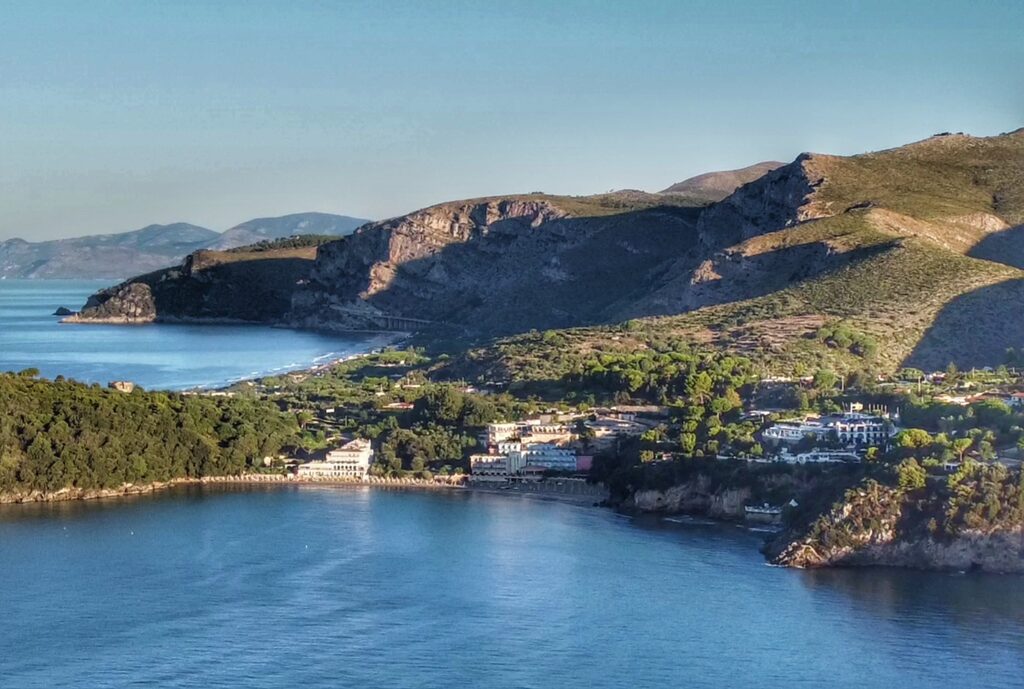
San Vito Beach is a small bay with several hotels and other accommodation facilities. Here, you can still swim in clear waters, explore sea caves and secluded coves, while the seabed is ideal for swimming and diving. The waters offshore are also often used as a sheltered anchorage by sailing boats looking for a quiet corner of paradise.
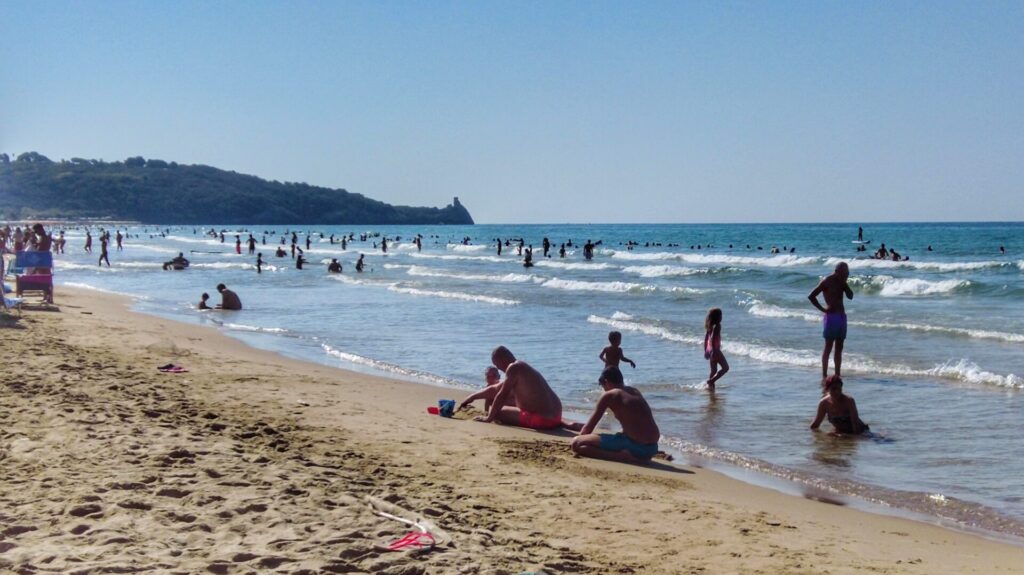
Sant’Agostino Beach is a long stretch of sand between rocks, cliffs and cultivated countryside, along the SS Flacca. It offers a sweeping sea view and is an excellent surfing spot, while during certain months of the year the cliffs attract enthusiasts of free climbing.