


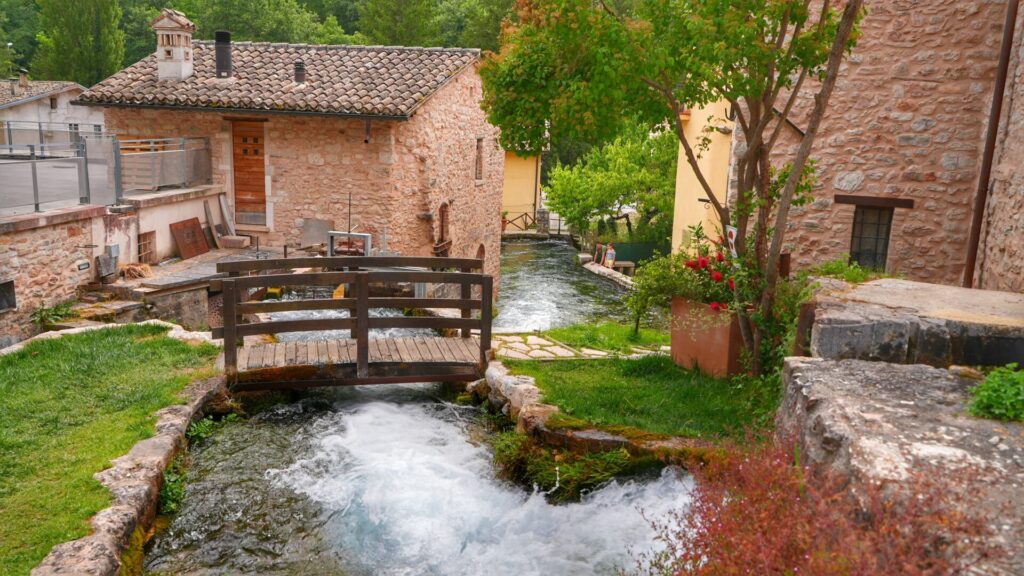
With its 648 metres of altitude, stone houses and water flowing between narrow streets, little bridges and small cascades, Rasiglia is one of the most picturesque villages in the Menotre Valley. A mountain hamlet belonging to the Municipality of Foligno, in the province of Perugia, it lies about 18 kilometres from Foligno, along State Road 319 Sellanese, and preserves its characteristic medieval layout, clustered almost like an amphitheatre.
Known also as the “Village of Streams” and, in tourism contexts, as the “Little Venice of Umbria”, Rasiglia owes its fame above all to the presence of water, which here is not merely a landscape feature, but a true key to understanding the history of the village.
Water, the heart of Rasiglia
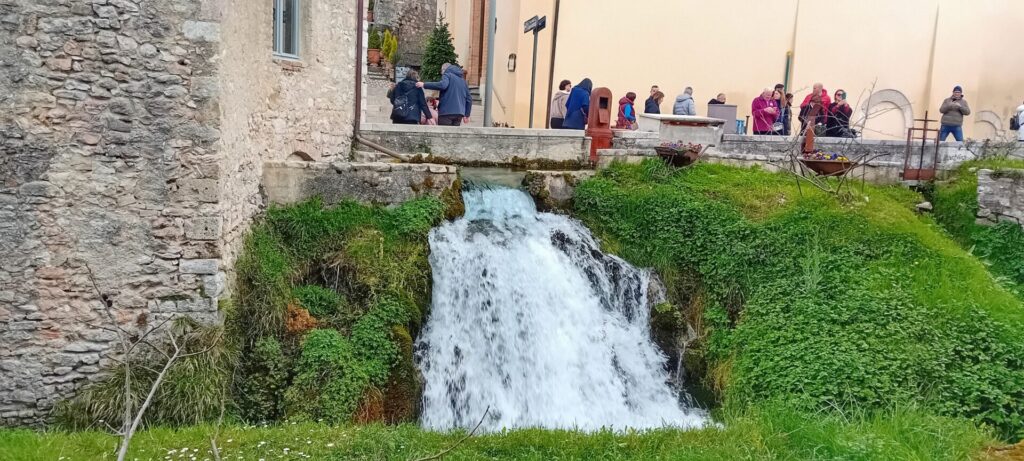
The true symbol of the village is the Capovena spring, which rises in the upper part of the settlement, at the foot of the ancient palace associated with the Trinci family. From here, the water flows through Rasiglia, forming streams, channels and small waterfalls, before collecting in the Peschiera, a large basin from which it eventually continues towards the Menotre River.
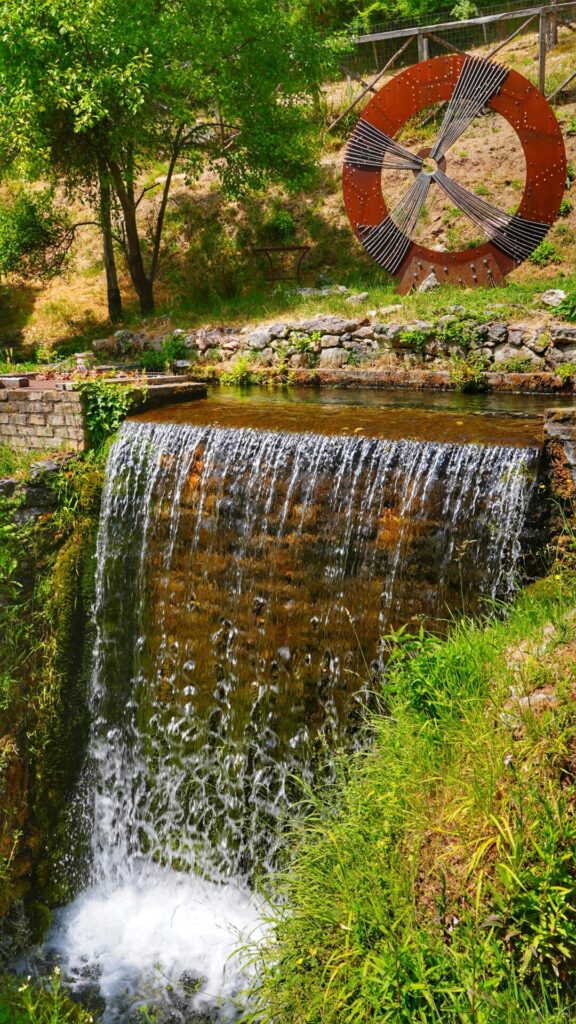
Capovena is joined by other springs, including Alzabove, Venarella, Le Vene, Vena Pidocchiosa and the Vene di Campolungo, which contribute to the area’s abundant water resources. It is precisely this intertwining of water, houses and ancient production facilities that makes a walk through the historic centre so distinctive.
The nickname “Little Venice of Umbria” is therefore a tourism designation, not an official name, but it immediately conveys the village’s most evident characteristic: water is almost always present, visible and audible as you walk along its narrow streets.
A village where water became work
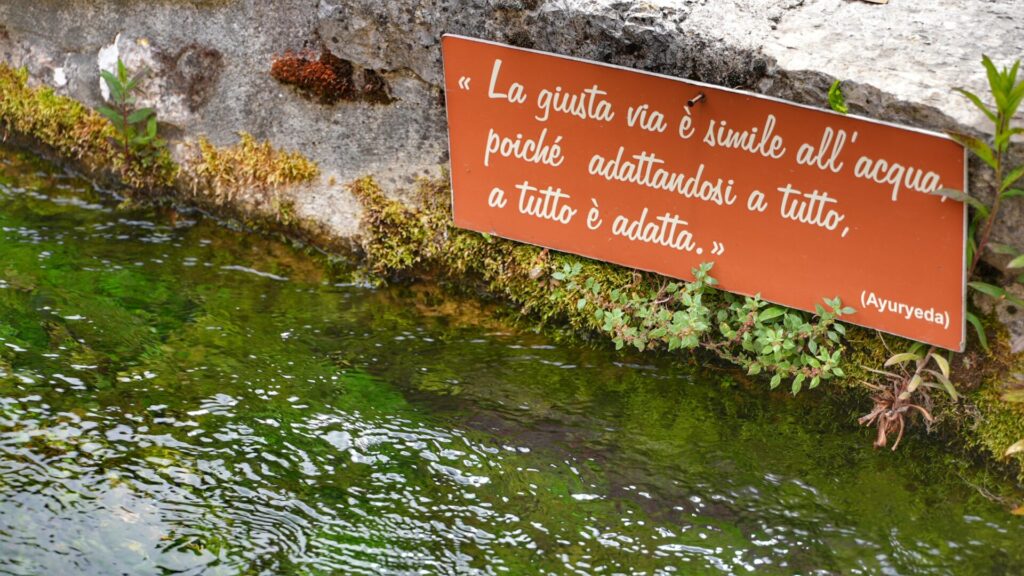
Rasiglia’s history is closely linked to the use of its water resources. For centuries, the power of water drove mills, fulling mills and workshops, supporting the development of wool and textile production.
The production tradition included several stages, from shearing to spinning, dyeing and weaving. The area also became an important stopping point along the commercial routes connecting the Tyrrhenian and Adriatic regions.
Textile production reached particularly significant levels with the village’s two main wool mills, Tonti and Accorimboni, while water-powered activities also included grain processing. During its period of greatest development, Rasiglia was home to several mills, including those belonging to Accorimboni, Angeli, Silvestri and Ottaviani.
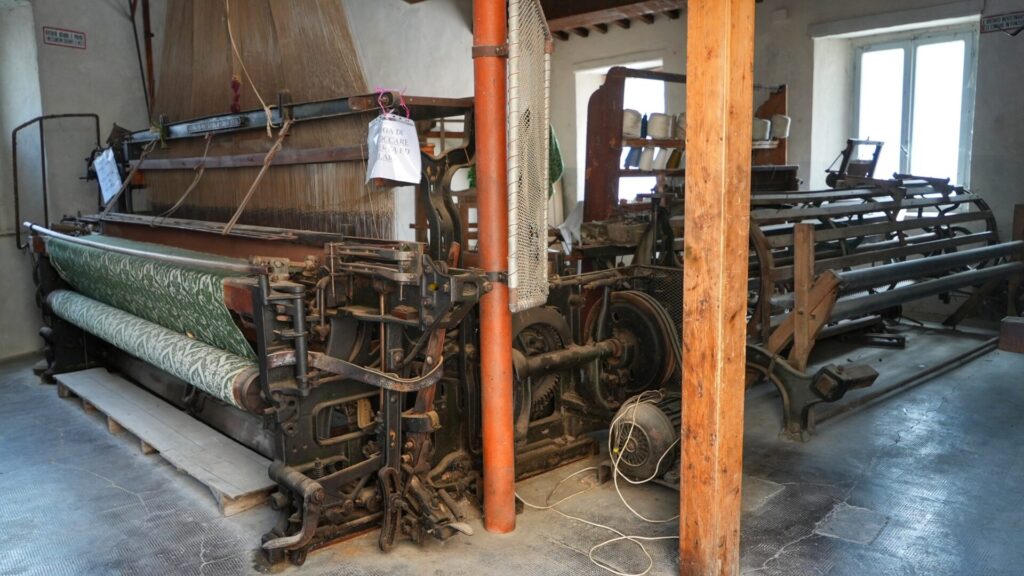
Worth highlighting is the Textile Archaeological-Industrial Park, which preserves the memory of this activity and illustrates the evolution of production techniques, from hand looms to those powered by hydraulic energy and eventually to the mechanical Jacquard loom, an example of which can still be seen.
It is precisely this heritage that distinguishes Rasiglia from a merely “scenic” village: behind its streams lies a genuine industrial history, built around the relationship between water, craftsmanship and work.
The medieval origins and the Trinci family
Rasiglia’s origins can be traced back at least to the 12th century, according to regional tourism documentation. In 1258, the village is documented as a castrum belonging to the Municipality of Foligno.
The village’s position, close to the communication routes crossing the Apennines, increased its strategic importance. The Trinci, lords of Foligno from 1305 to 1439, built a fortified structure in Rasiglia intended to control the surrounding territory.
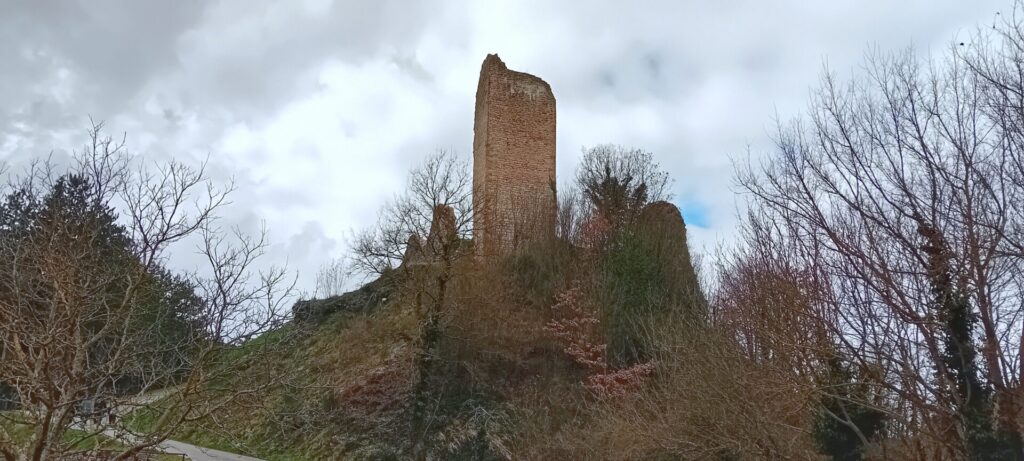
Today, remains of the ancient defensive system include the Rocca dei Trinci, with sections of the walls and the ruins of a tower, while the so-called Castellina recalls the fortified organisation of the village. The path leading to the remains of the fortress also offers views over Rasiglia from above, helping visitors better understand its position in the Menotre Valley.
The churches and the Sanctuary of Madonna delle Grazie
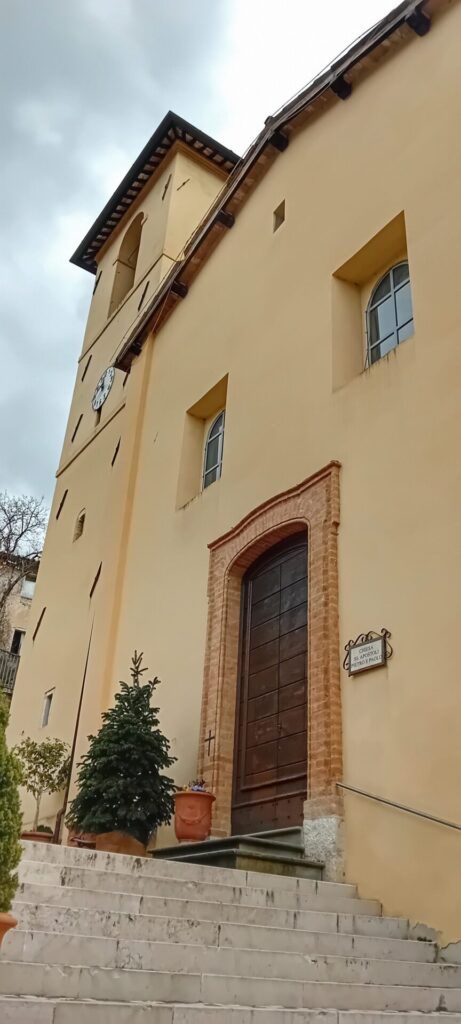
Among the village’s religious buildings is the Church of Saints Peter and Paul, identified in municipal documentation as an 18th-century building. The historic centre also contains other religious landmarks, including the former Monastery of San Michele Arcangelo and the Oratory of San Filippo.
A short distance from Rasiglia, the Sanctuary of Madonna delle Grazie is well worth a visit. It is one of the area’s main religious landmarks and a stop that can be included in a broader itinerary through the Menotre Valley. The sanctuary is also mentioned in the main institutional tourist guides dedicated to Rasiglia.
The legend of the “pagan waters”
Alongside documented history, a curious legend connected precisely to the origin of Rasiglia’s waters has survived.
According to popular tradition, the springs flowing from the Verchiano plateau were considered a kind of “pagan waters”, because they allegedly flooded the land, making it difficult to cultivate. The inhabitants are said to have tried to block their course using sacks filled with wool; the water subsequently found a new route towards Rasiglia.
This is, naturally, a legend rather than a documented historical reconstruction, but the story is particularly interesting because it symbolically connects two elements that shaped the village for centuries: water and wool.
The earthquake and rebirth
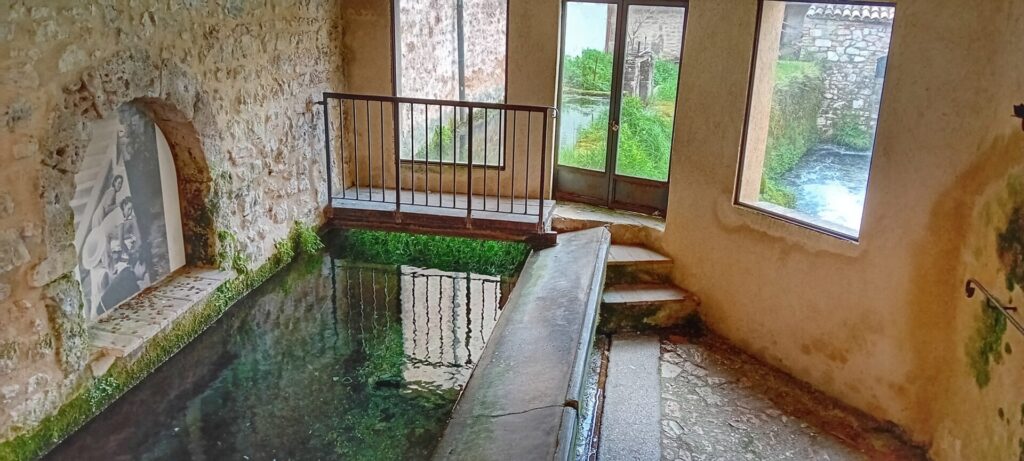
Rasiglia’s contemporary history is deeply marked by the 1997 earthquake, which severely affected the Foligno area and led a large part of the population to leave the village. Subsequent architectural restoration has made it possible to restore buildings and structures connected with the village’s productive history, including the mill, the wool mill and the ancient washhouse.
Rasiglia’s rebirth has thus become an integral part of its tourist identity: today the village is presented as an example of the recovery of a small historic centre where architectural heritage, the memory of work and the natural environment are closely interconnected.
What to see in Rasiglia
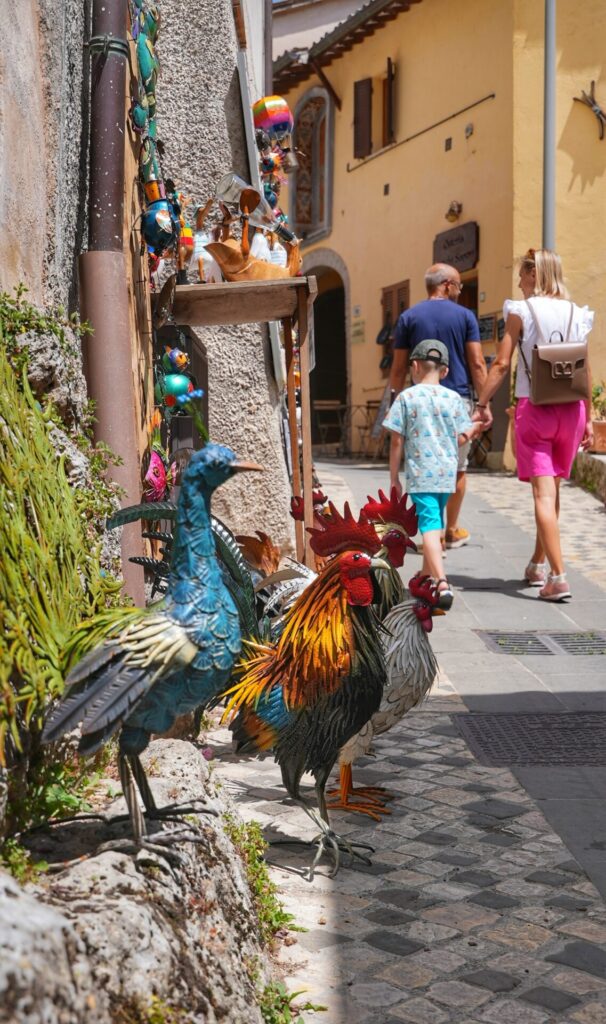
A walk through Rasiglia’s historic centre reveals, within just a few steps, the village’s characteristic relationship between water and its ancient layout. The route can begin at the Capovena spring, the true heart of the local water system, whose waters flow through the settlement, forming small streams and waterfalls before reaching the Peschiera, a large basin that is one of Rasiglia’s most picturesque spots.
Following the waterways, visitors encounter traces of the village’s ancient productive vocation, from the old mills to the former Tonti and Accorimboni wool mills, reminders of how the power of the springs was used in wool and textile production. Particularly interesting is the Textile Archaeological-Industrial Park, where the history of this activity is illustrated through the structures and tools used over time, including a mechanical Jacquard loom.
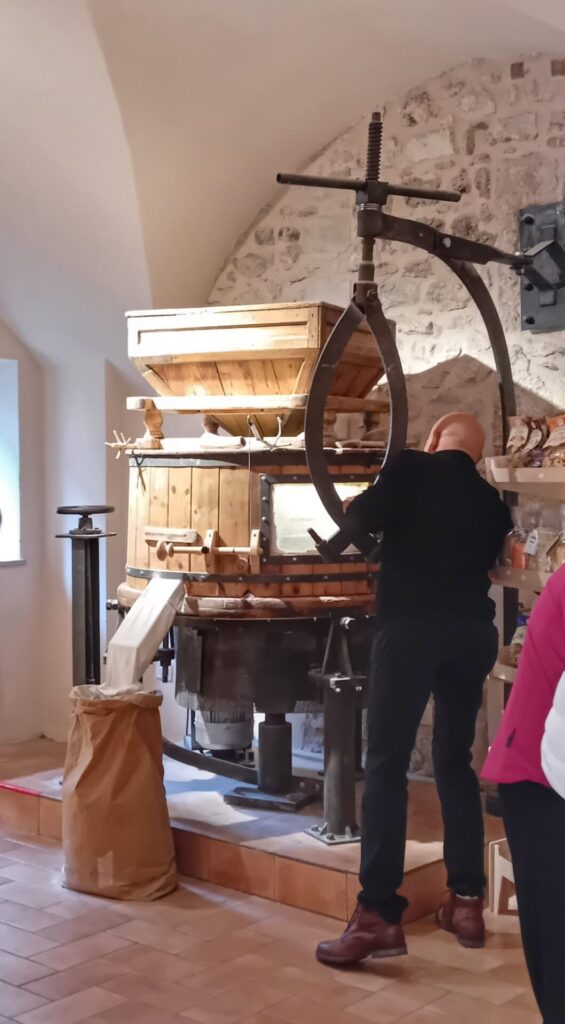
Continuing along the stone-paved streets, visitors can also see the ancient washhouse and the Church of Saints Peter and Paul, while climbing towards the highest part of the settlement leads to the remains of the Rocca dei Trinci and the Castellina, evidence of the ancient fortified system that protected Rasiglia and the valley. From above, moreover, the village’s distinctive position and compact layout can be appreciated more clearly.
Finally, a short distance from the centre, the Sanctuary of Madonna delle Grazie is worth visiting. It is an important place of worship in the Menotre Valley and can be included in the same itinerary along with the area’s other attractions. Rasiglia is therefore ideal for an unhurried visit, in which following the course of the water also becomes a way of retracing the medieval, religious and, above all, artisan history of this small Umbrian village.
The Menotre Valley
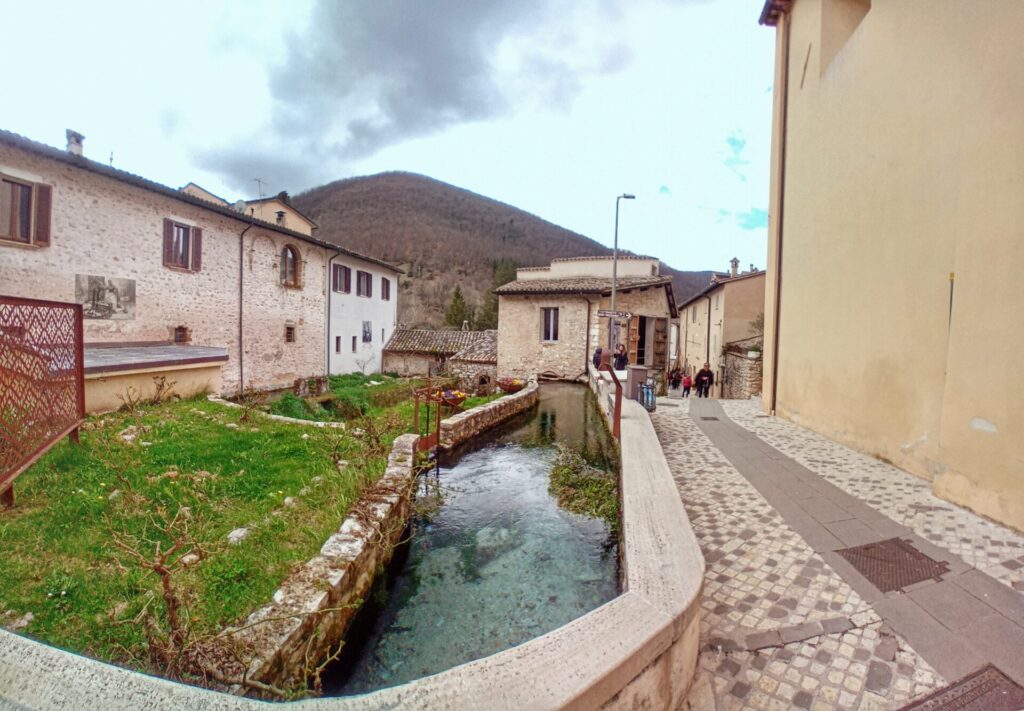
Rasiglia can be included in a broader itinerary exploring the Menotre Valley, an area characterised by forests, springs and waterways.
Nearby are the Altolina Park, the Menotre Waterfalls and the Grotte dell’Abbadessa, karst caves featuring stalactites and stalagmites. For nature lovers, the area therefore offers the opportunity to combine a visit to the village with hikes and walks through the Apennine landscape.
The combination of village, springs and natural environment makes Rasiglia particularly interesting for those who want to discover a part of Umbria less associated with the major art cities and more closely connected with rural and mountain landscapes.
Events and traditions
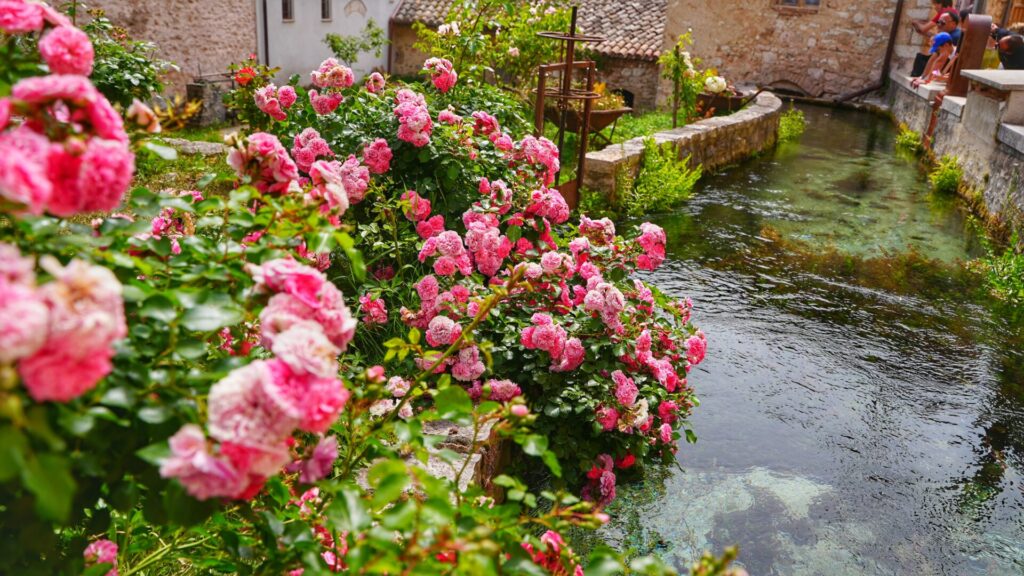
The textile tradition continues to be celebrated through “Penelope a Rasiglia”, an event dedicated to the ancient crafts of weaving, highlighting the historic relationship between water, wool and textile production. The event takes place in June.
During the Christmas season, meanwhile, Rasiglia hosts its traditional living nativity scene, helping transform the small village into a picturesque setting devoted to traditions and ancient crafts.
Event dates may vary, so it is advisable to check the updated calendar before travelling.
What to eat in the surrounding area
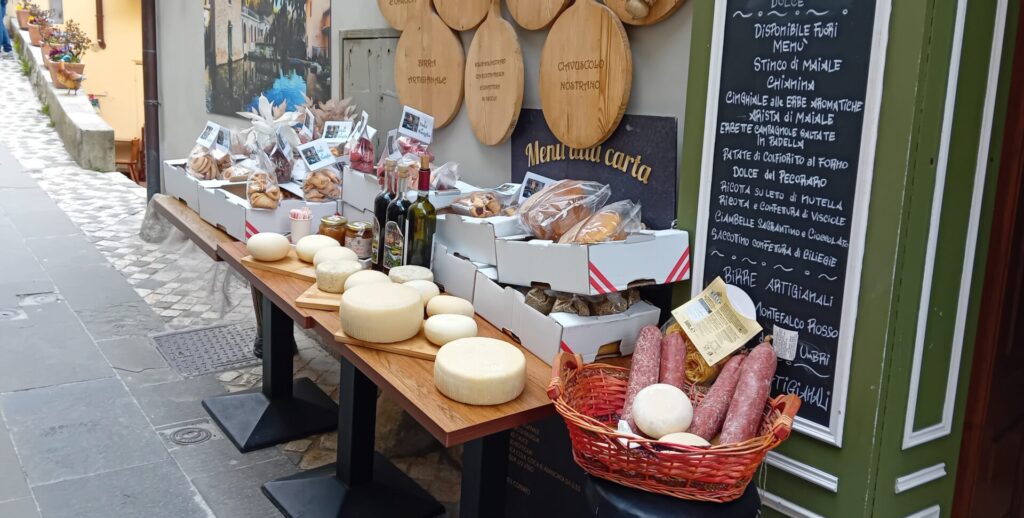
The cuisine of Rasiglia should be considered within the broader context of Umbrian and Apennine cooking. Among the specialities to look for in local restaurants and trattorias are torta al testo, Umbrian cured meats and cheeses, fresh pasta with truffles or mushrooms, soups and dishes based on legumes.
Among Umbria’s traditional desserts, the rocciata deserves a mention, while for wine, visitors can look to the production areas nearby, including those around Montefalco.
It is important, however, not to attribute these products exclusively to Rasiglia: they are specialities belonging to the gastronomic tradition of Umbria and the wider region.
When to visit Rasiglia
 Rasiglia can be visited throughout the year. Spring and autumn are particularly interesting for those who want to combine a walk through the village with excursions in the Menotre Valley, while the Christmas season offers a special atmosphere thanks to the traditional events.
During periods of high visitor numbers, especially weekends and holidays, the centre can become very busy. To better appreciate the narrow streets, the water and the most characteristic views, it can be useful to choose a weekday or arrive early in the day.
Rasiglia, where water tells the story
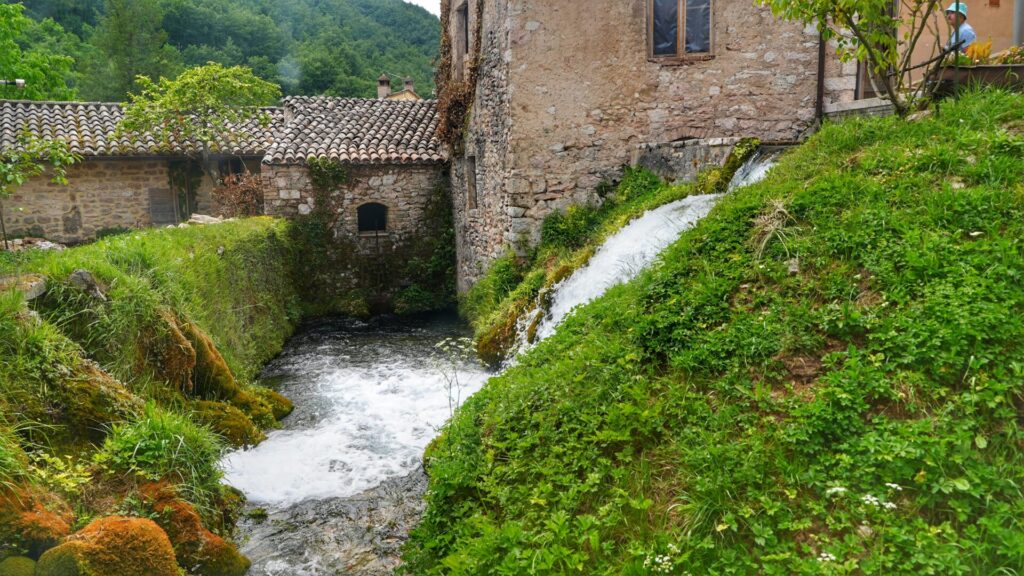
Rasiglia immediately stands out for its streams, but the real reason why it is worth visiting is deeper: here, water tells the story of the village.
From the Capovena spring to the channels, from the Peschiera to the mills, from the fulling mills to the wool mills, and finally to the heritage of the Textile Archaeological-Industrial Park, every element bears witness to the centuries-old relationship between the community and a natural resource transformed into energy, work and development.
The Rocca dei Trinci recalls the medieval past, the Sanctuary of Madonna delle Grazie reflects the religious dimension of the area, while the rebirth following the 1997 earthquake adds an important chapter to the village’s contemporary history.
It is this combination of water, history, industrial archaeology, nature and traditions that makes Rasiglia one of the most distinctive stops to include in a journey through Umbria. And to truly understand it, rather than simply passing through, it is worth following the sound of the water slowly between the houses and pausing to observe what remains of the ancient village of mills and wool mills.