

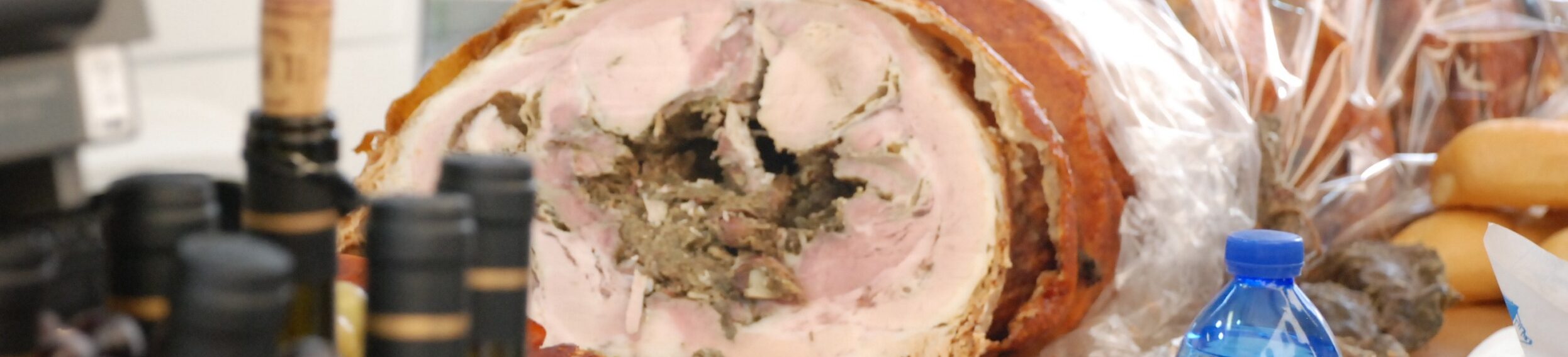
There’s a smell that, in some Italian squares, is enough to make you stop in your tracks: crackling skin, rosemary or wild fennel slowly roasting, the heat rising from an oven that has been burning for hours. That’s porchetta, and anyone who has tasted it at least once knows it’s far more than a simple sandwich filling. For centuries, it has been part of the shared ritual of village festivals, fairs and local markets.
A disputed origin — and perhaps that’s part of the appeal
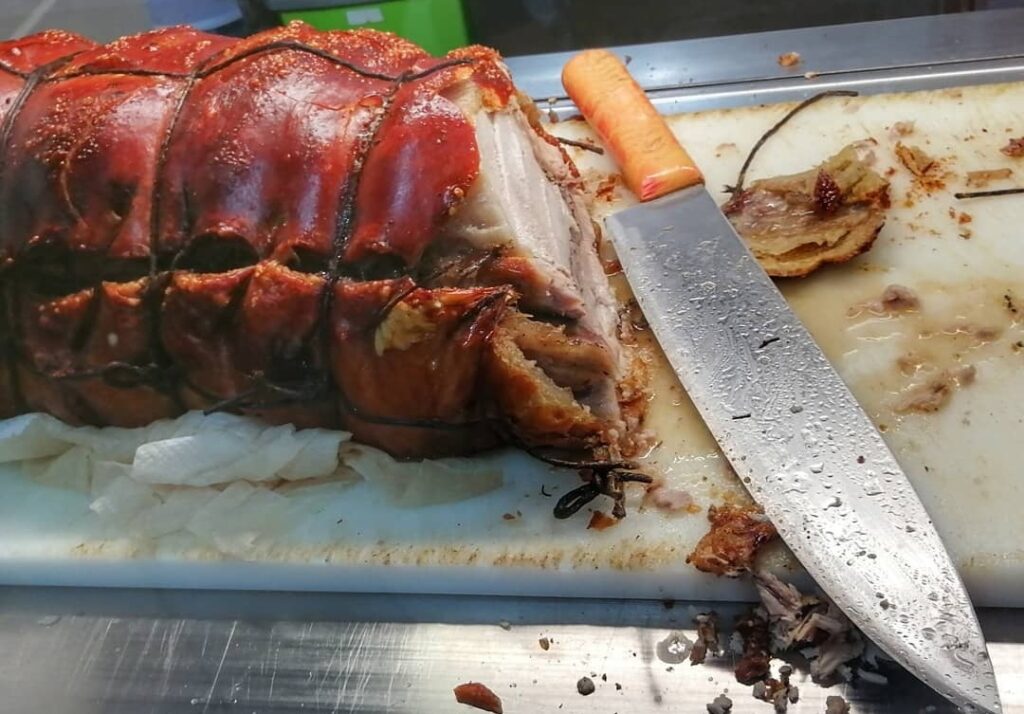
Ask someone from Ariccia where porchetta was invented and you’ll get an immediate answer. Ask the same question in Norcia, in Umbria, a historic centre of pork butchery, and you’ll hear a different story. In northern Lazio, its origins are said to go all the way back to the Etruscans, while in Campli, in the province of Teramo, the 1575 municipal statutes already laid down rules for selling and cooking the dish. Even a drawing by Leonardo da Vinci appears to show a porchetta tied using techniques not all that different from those still used today. The truth is that no one can say for certain where the recipe originated, and perhaps that’s exactly what makes it so fascinating: porchetta belongs to all of central Italy, with every town claiming its own version and its own story to tell.
Two traditions, two distinctive flavours
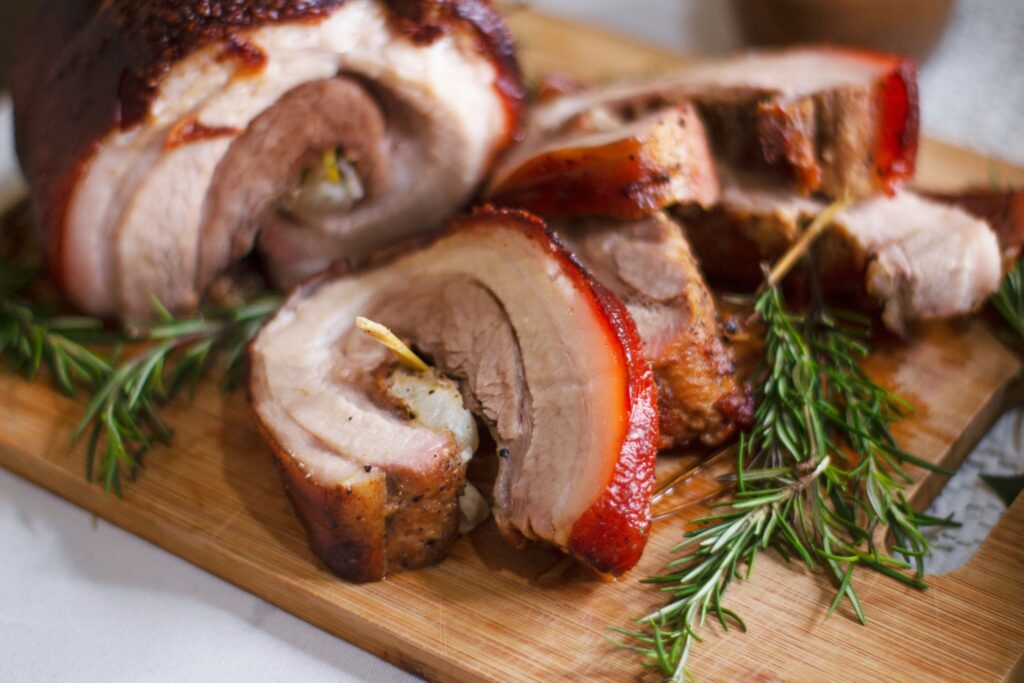
Travel across Italy and you’ll find two main porchetta traditions. There’s the rosemary version, typical of southern Lazio — most famously associated with Ariccia, which has held PGI status since 2011 and was already celebrated by Carlo Emilio Gadda, who in *That Awful Mess on Via Merulana* imagined it generously stuffed with rosemary — and the wild fennel version, found throughout Umbria, the Marche, Tuscia and Romagna, in historic towns such as Cellere, Soriano nel Cimino or Costano. Every town fiercely guards its own recipe, which may include garlic, pepper, sometimes diced liver and spleen, and handfuls of aromatic herbs, while in some areas you might even find sour cherries and almonds.
A craft passed down through generations
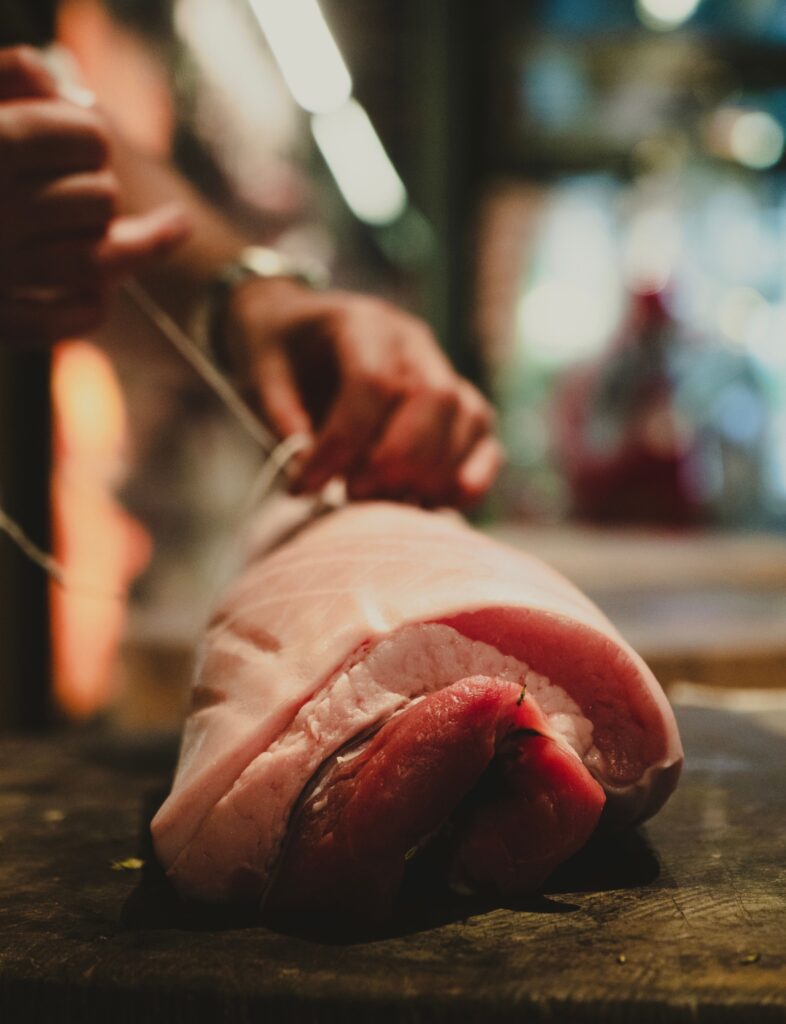
Making proper porchetta is a true artisan craft, not something you can master by casually following a recipe. It starts with a pig of around one year old, weighing no more than 100 kilos. After being drained of blood and scalded to remove the hair, it is gutted, boned and carefully stuffed. Then comes the most spectacular part: the carcass is threaded onto a spit, tied securely with string and placed in the oven — ideally a wood-fired oven, although stainless-steel ovens are more common nowadays — for five to eight hours of slow, painstaking cooking. The result is unmistakable: a beautifully browned, crackling crust that promises tender, succulent meat underneath.
At the table: how porchetta is really eaten
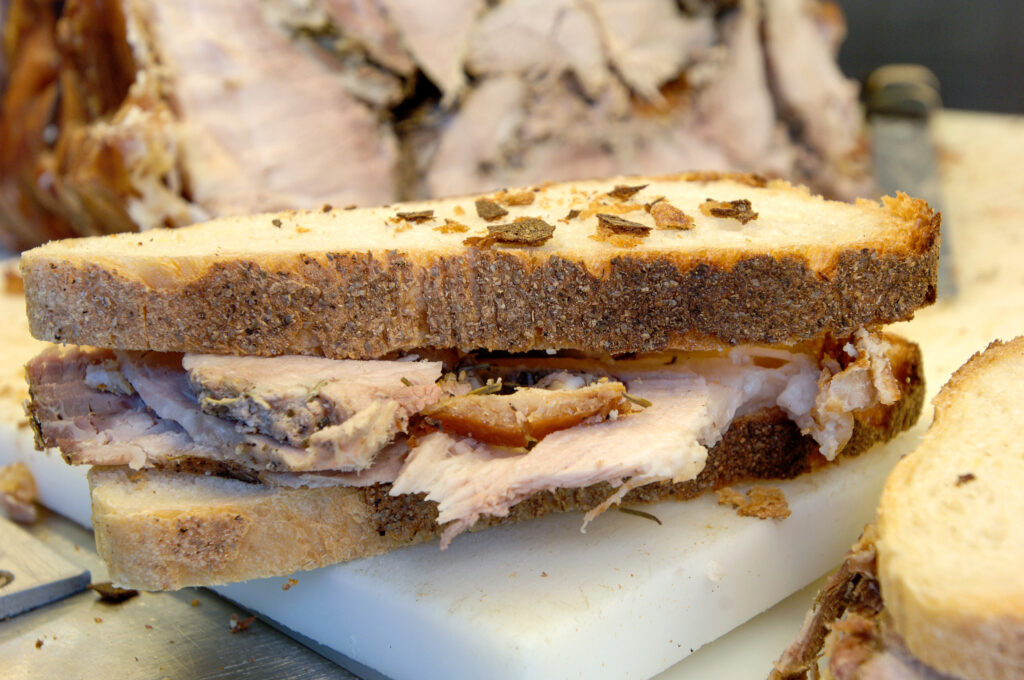
Porchetta is not a dish to save for later: it is best eaten warm, ideally on the very day it is made, when the spices and rendered fat are at their best. The easiest and most popular way to enjoy it is in a sandwich: a generous slice of meat and crisp skin tucked into rustic country bread. A Genzano IGP loaf or a crisp rosetta roll are the most traditional choices, although a ciriola or rustic focaccia can hold their own too. If you want to keep things traditional, add a few slices of fresh tomato, a handful of rocket or, for a touch of contrast, a little mustard or some caramelised onions.
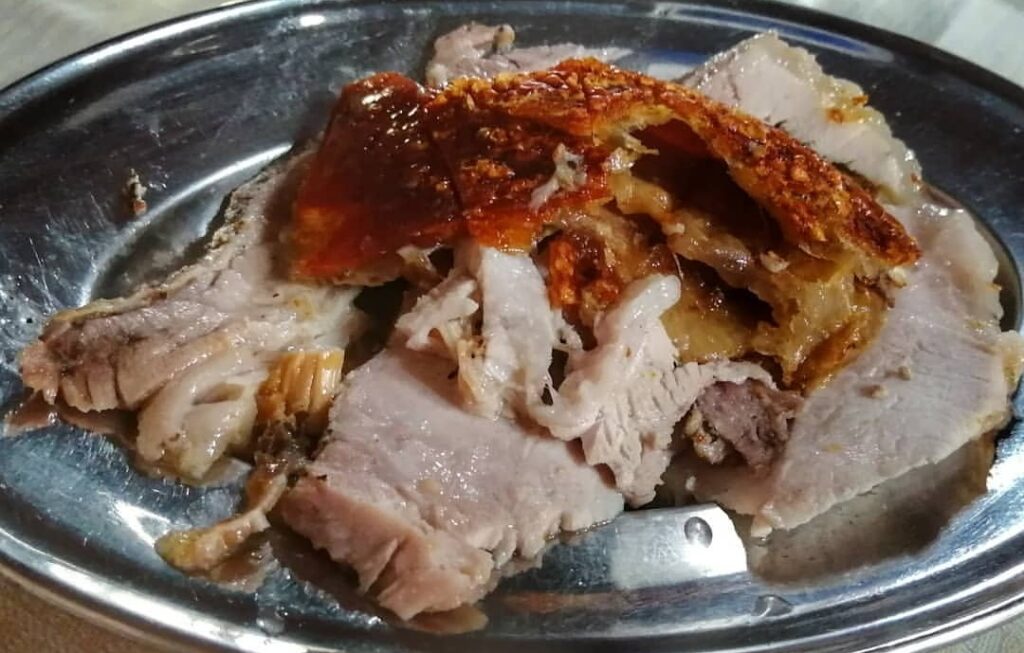
Served on a plate, porchetta calls for side dishes that can stand up to its richness. Pan-fried chicory with garlic and chilli — perhaps finished with a few shavings of Pecorino Romano — is the classic choice, followed by the ever-popular roast potatoes browned with the same herbs used for the meat. Grilled vegetables, or better still pickled ones, provide the acidity needed to cut through the richness, while a fresh salad of rocket and cherry tomatoes, or the more unexpected combination of fennel and oranges, lightens things up without taking away from the dish’s character. A parsley-based green sauce with anchovies and capers adds another layer of freshness, while caramelised onions bring the sweet-and-sour note that many consider indispensable.
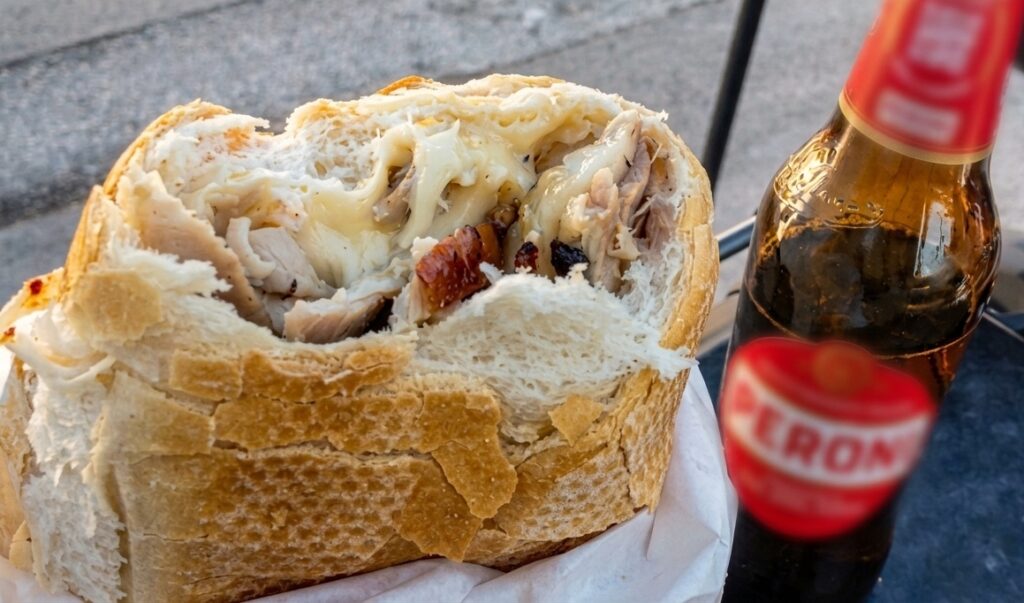
And what should you drink with it? A classic pale lager, refreshing but full-bodied, a Frascati DOC or, more generally, a white wine from the Castelli Romani are all natural choices, thanks to their bright acidity and palate-cleansing quality. If you’re after something sparkling, a Prosecco di Valdobbiadene works beautifully, while among reds, a young, low-tannin Sangiovese or a lightly chilled Cesanese del Piglio makes an excellent match.
Not just pork
Curiously enough, the porchetta method has long been used for more than just pork. In the Marche and Umbria, for instance, you’ll find rabbit “in porchetta”: the rabbit is boned, stuffed with garlic, liver and wild fennel, stitched up and slowly cooked in a casserole with lard and white wine, then finished with a squeeze of lemon. It is a lesser-known variation, but one that shows just how deeply rooted this culinary tradition is — at its heart, it is a cooking method as much as it is a recipe.
An Italian tradition with cousins around the world
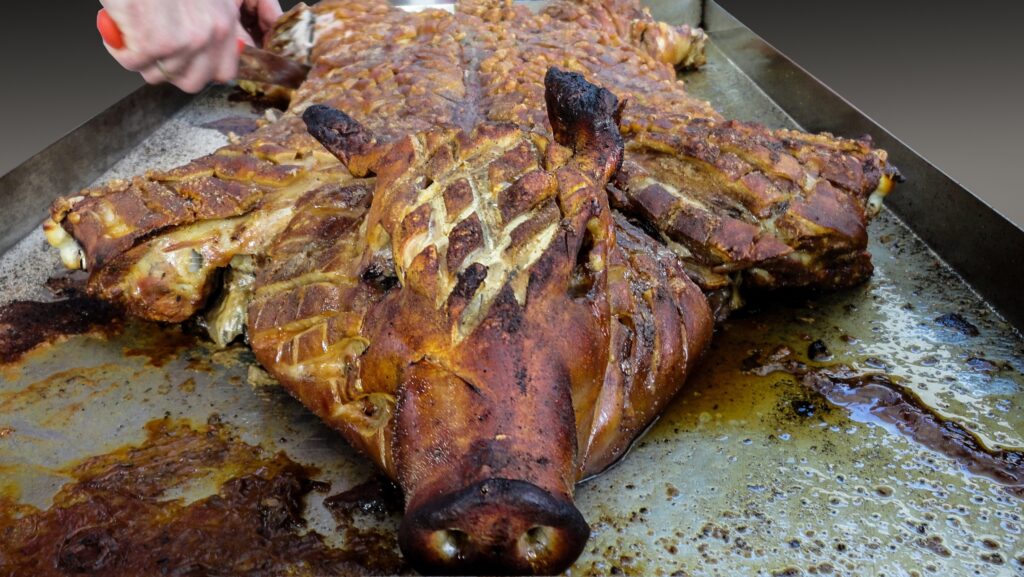
Similar ways of seasoning and roasting a whole pig can certainly be found elsewhere — from German spanferkel to Latin American lechón — but Italian porchetta has its own distinctive combination of aromatic complexity and traditional craftsmanship. Every slice tells a story: of a particular place, of a centuries-old argument over its origins, and of the village festivals that fill the calendar from Poggio Bustone to Selci, from Ariccia to Campli (the latter, incidentally, is traditionally held on the first Sunday of September, when the town’s calendar permits). And perhaps that is what makes porchetta such an authentic symbol of Italy: it isn’t a standardised dish, but a patchwork of local traditions that Italy has proudly never tried to bring into line.